

Leading Through Uncertainty: Embracing Uncertainty, Making the Most of Doubt
5 min read
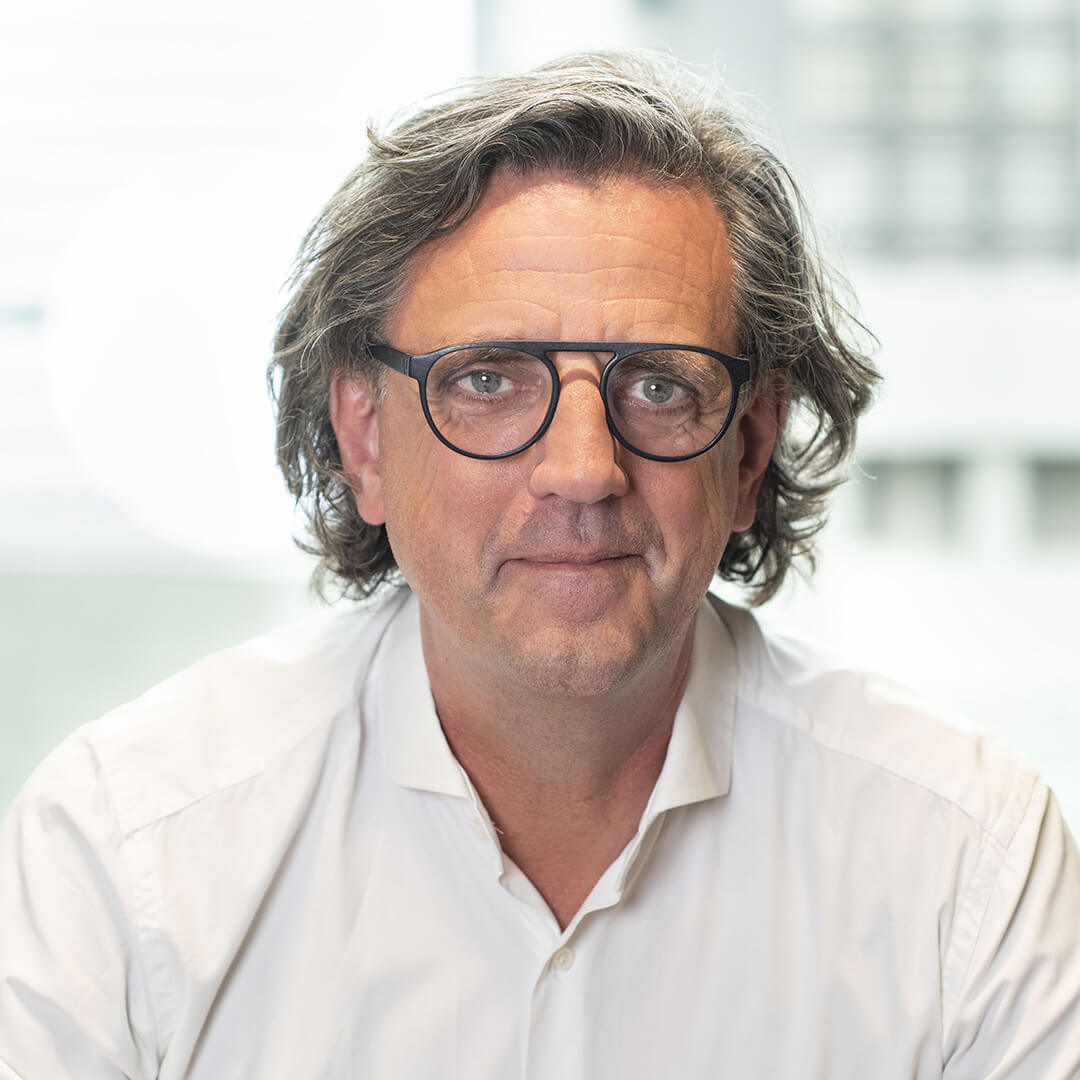

Leading through uncertainty is one of the most defining competencies in today's leadership landscape. But what does that actually ask of leadership in complex circumstances?
For Ed, Partner at Odgers and responsible for the Leadership practice, the answer begins with a distinction: uncertainty is something you accept, doubt is something you can examine. His career, from accountant, via GE and a leap into the House of Representatives, to nearly twenty years at Odgers, shows how deliberate choices for the unknown, combined with self-knowledge, ultimately lead to leadership that provides direction and leaves room for others.
What unexpected turn in your career has shaped you into the leader you are today? And how does that experience help you deal with uncertainty?
“Dealing with uncertainty, for me, doesn't really depend on changing jobs. It's mainly about whether you're able to do something with uncertainty. Even someone who works for the same company for fifty years will encounter it. It's just that different moments and circumstances bring on that uncertainty.
For me, it starts with getting as close as possible to yourself: knowing what you can do, what you can't, and making choices on that basis. That sounds simpler than it is. There are always reasons to postpone choices, financial, social or status-related. I wish everyone could stay as close as possible to themselves and make choices from there. I've only really done that myself in recent years.
I started the way you were supposed to: work hard and build a career. The first time I truly did what I wanted, rather than what others expected of me, was my move to the House of Representatives. I'd always said I wanted to be in the House before I turned forty, and I got that chance. It wasn't an obvious career step and it brought uncertainty with it. But if you really want something and believe you can do it, you can act on that. It became a relatively short, but fine period.
That step gave me the confidence to later choose the unknown again: Odgers. I had more comfortable options too, but I deliberately chose a route where I didn't know exactly what it would bring. In the days before I started, I lay awake. What was I getting into? I had to sell something I still knew little about, it felt like plain trading in CVs, and the commute was an hour and a half each way. Yet something good can come of it if you're willing to take on the unknown. At Odgers, I was eventually given the chance, and took it, to build up the advisory practice. That too came with questions: can I do this, do I dare?
What helps me with that is the distinction between uncertainty and doubt. Uncertainty is external: the economy, the world, circumstances you can't fully control. You have to accept that, embrace it and act accordingly. Doubt is about something you're not yet sure of yourself. That you can examine. I lean more towards doubt than uncertainty.”
Which leadership quality do you consciously draw on when circumstances change or become complex? And how do you see that reflected in your work?
“If you know what you can do, you also know what you can't. That helps. One quality I've had to learn, and still don't always apply as a matter of course, is asking for help. That means recognising that someone else can do something better, and giving them the room to do it. I grew up in the Westland, where you didn't talk about help or weaknesses, let alone feelings. That only developed later in my career. But if you dare to ask for help and recognise that someone else can do something better, it's an enormous release.
The world has also become more complex. You shouldn't just draw on others because they're good at something, you need to genuinely work together with them. I believe less and less in the idea that you can do everything alone. That calls for leadership in complexity: motivating, making others better, challenging and giving room.
I also think it's important not to take yourself too seriously. You should take your work seriously, but anyone who claims to know everything or to make the difference everywhere should ask themselves whether that's actually true. Humour, and what I call 'intellectual lightness', help in working with others: room for perspective, without it becoming non-committal.”
In what area do you want to grow or experiment further yourself this year?
“I'd like to dare a little more. I grew up with the idea: first be able to, then do. But if you really want an organisation to move forward, sometimes you have to jump in at the deep end without being fully certain. That, for me, is the difference between genuine entrepreneurs, not all of whom succeed either, and people like me.
You see that reflected in our work in leadership. We prove ourselves as an organisation first and only expand once we're successful. Perhaps it would have been better to expand sooner. So yes, I'd like to be a bit more fearless.
I also want to make more time to really be there for the other person and help them succeed. In the day-to-day handling of work, that sometimes gets squeezed out. There's no shortage of ideas, but execution remains the difficult part.”
Embracing Uncertainty, Making the Most of Doubt
Ed's story shows that leadership in uncertainty doesn't begin with seeking certainty, but with daring to distinguish between what you must accept and what you can still figure out. Uncertainty is part of the world and doesn't go away. Doubt is about the choices you can examine and make yourself. That this year he specifically wants to work on daring more and waiting less fits seamlessly with that, and touches on a broader question: how do you keep providing direction when circumstances are complex and unpredictable?
Leadership doesn't always call for more certainty. Sometimes it begins precisely with seeing clearly what remains uncertain, and what can still be examined. Would you like to discuss leadership in complex circumstances, or the development of leaders and teams? Get in touch with Ed.
Never miss an issue
Subscribe to our global newsletter to discover our latest insights, opinions and featured articles.
Follow us
Join us on our social media channels and see how we're addressing today's biggest issues.