

Leading Through Uncertainty: Discipline as an Anchor
5 min read
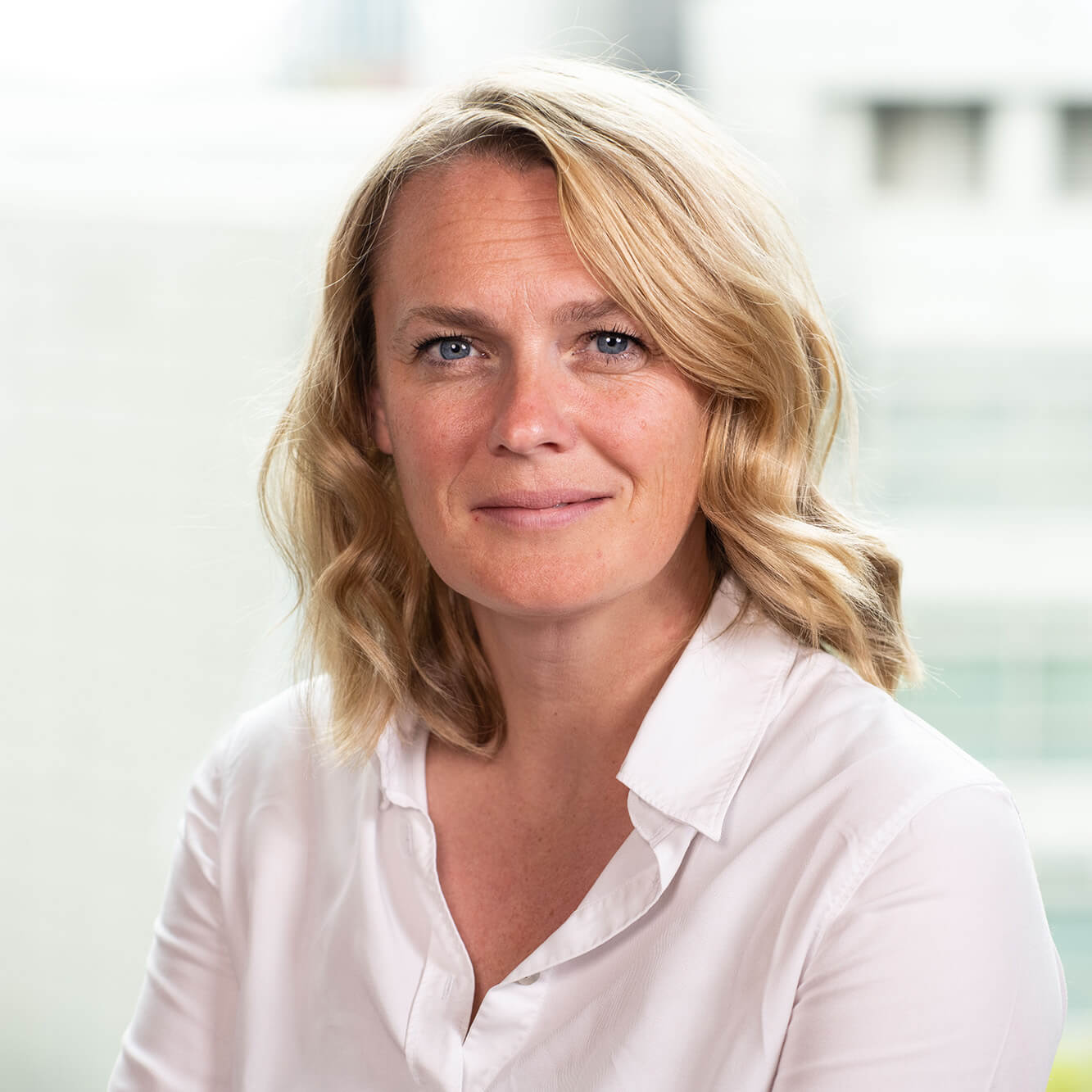

Leading through uncertainty. It may well be the most sought-after competence of our time. But what does it actually mean in practice? How do you navigate unpredictable situations as a leader, and how do you keep developing yourself along the way?
We asked Maaike, Partner at Odgers, about the experiences and choices that have shaped her. Her answers offer an honest insight into how discipline, directness and growing visibility come together in the way she leads.
Which unexpected turn in your career has shaped you into the leader and adviser you are today? And how does that experience help you deal with uncertainty?
“My life has perhaps not had more unexpected turns than anyone else’s. What has probably shaped me most is that I was never destined to become a partner in an executive search firm. I come from a family of three, and at home I was never the one regarded as ‘the clever one’. I was advised to take the lower vocational route (lbo), but ended up completing havo (senior general secondary education) anyway. After secondary school I went into vocational education (mbo), which is what the people around me expected. Simply because pursuing higher professional education (hbo) was never a topic of conversation.
After finishing hotel school at mbo level, I started my working life in the reservations department of a hotel. I then moved, via a role as a medical representative at AstraZeneca, to a recruitment agency. There, placing office staff, I noticed for the first time: I can do this, and I enjoy it. To progress, I needed to demonstrate hbo-level working and thinking. As I could not show that with a diploma, I enrolled on an hbo programme. For a year, alongside my job, I attended lectures two evenings a week and gained my hbo first-year certificate. Purely to have the piece of paper that let me tell the world I really could work at that level.
What has also shaped me are the people I met along the way who said: I think you can do this, go for it. Odgers has played an important part in that, by offering me every opportunity. Above all, it placed its trust in me at moments when I did not yet believe in myself and my CV did not make that trust an obvious choice.
I apply that same conviction to candidates, particularly for executive and supervisory roles in healthcare: it is never about ticking a box. A diploma shows that you have operated at a certain level, but that is not where the value lies. The value lies in the question: what vision do you bring, which questions do you ask, what leadership do you show? I know healthcare leaders who also started out in mbo and worked their way up to the top. That is the exception, and there must be relevant experience to match what someone is expected to achieve. But the diploma itself is never the answer to whether someone can create value.”
Which leadership quality do you deliberately draw on when circumstances change or become complex? And how does that show in your work with colleagues, clients and candidates?
“When things get really difficult, I fall back on the discipline that has carried me throughout my career. I don’t always know exactly what will happen, but if I go back to basics and do things the way I believe they should be done, with the right intentions, we will get there. That gives me something to hold on to, even though I am sometimes challenged on it.
What also helps is a kind of five-year perspective: what occupies me enormously today is often forgotten within six months. That doesn’t put everything into perspective, but it helps me work my way through a difficult situation instead of getting stuck in it.
When things become truly complex, I become more directive towards the people around me: clearer about what I want at that moment and why. My fellow partners know this pattern well by now. For the people I work closely with, it works. They know exactly where they stand with me, even under pressure. It is a conscious choice, but I also know that the same directness can sometimes come across as rigid. I keep myself alert to that.
A tip I was given once, and which still helps me: ‘it’s not about you’. When someone reacts sharply under pressure, nine times out of ten it is projection, not a judgement on me. That realisation brings calm, and I would wish that insight on anyone working with others.”
In which area do you want to grow or experiment this year?
“My biggest challenge is letting go. I like control, and I want to deliver a certain level of quality. The moment I feel that quality is slipping or things are not moving fast enough, I step in to fill the gap and tend to solve it myself. The feedback I have been getting for years is that I keep too much to myself and delegate or let go too little.
I can carry on for weeks without difficulty, keeping a lot to myself. Often I only realise afterwards that this was not always the best route. Where I want to grow this year is in being less in control and trusting more that it will work out, even when I am not on top of it.
I also want to take on the role of culture carrier more and be more visible. Not by changing who I am: I am perfectly capable of standing on a stage, but I don’t need to. I would rather be in the audience than the speaker. For me it is about finding the balance between being visible and staying close to myself, without it becoming unnatural.”
Discipline as an anchor
Maaike’s story shows that leadership does not necessarily begin with a flawless CV, but with the willingness to persevere where it gets difficult. In her executive search work in healthcare, this means she looks beyond experience on paper: leadership potential, governance sensitivity and context also carry considerable weight. That she is now looking for more letting go and more visibility, while control and discipline have always carried her, does not make her story any less convincing. It shows that she is as critical of herself as she is of the candidates she assesses.
At Odgers, we believe the best advisers keep moving, keep asking questions and take others along on that journey. Do you recognise these challenges? Or would you like to exchange views on leadership in complex circumstances? Get in touch with Maaike.