

Leading Through Uncertainty: Staying True to Yourself
5 min read
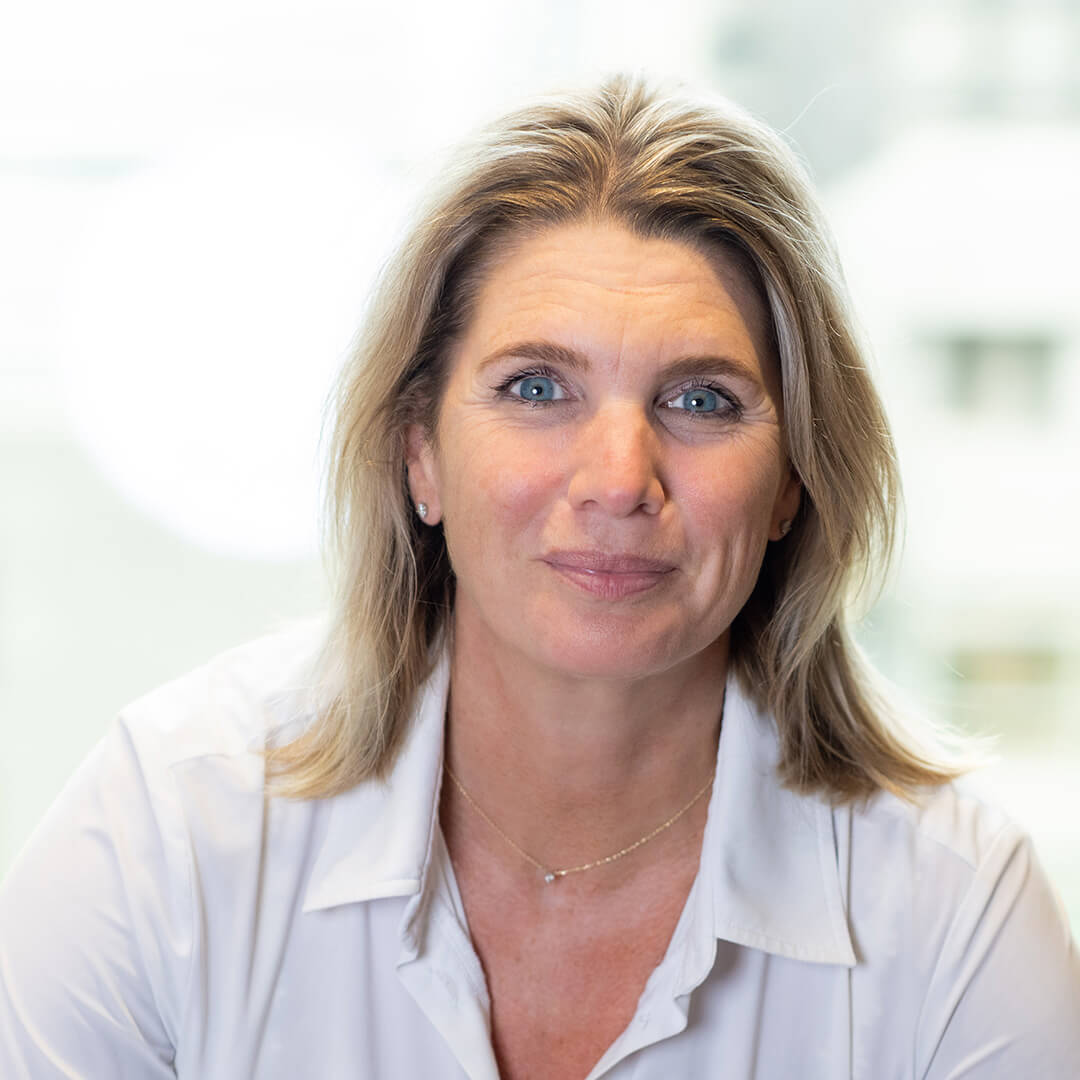

Leading through uncertainty is one of the most defining competencies in today's leadership landscape. But what does it concretely demand of a leader, and how do you build that capacity structurally?
For Kristien, Managing Partner at Odgers and leader of the Industry practice, the answer begins with inner leadership. Not with faster answers or firmer frameworks, but with the ability to stay close to yourself, especially when circumstances become uncertain. Her career illustrates how conscious choices, connection and presence come together in leadership that gives direction without losing sight of the human dimension.
Which moments in your career have shaped you most, and how do those experiences help you navigate uncertainty?
"There are two moments that have been defining. The first was a promotion I thought I would receive, and which ultimately did not come. I appeared to be an obvious candidate for that role, but I did not get it. From that I learned that it is not only about how good you are at your work, but also about how you relate to the stakeholder landscape. People need to see you and know you. I thought: if I do my work well, things will follow. That turned out to be too narrow an assumption.
The second moment was a promotion I was offered, but which I consciously chose not to accept. I no longer believed in the direction the organisation was taking and noticed that in that corporate environment I found it difficult to stay true to myself. When leaders began to push for a direction I did not stand behind, I found myself in a bind. I wanted a role in which I could continue to stand for what I believe matters, and I found that at Odgers.
That decision also allowed me to become a better leader. I believe that a good leader stands as close to themselves as possible. Only when you are truly connected to yourself can you be connected to your people. And precisely in times of uncertainty, that is what counts. Leading through uncertainty then becomes about being resilient by staying close to yourself and being able to hold your ground in the storm."
Which leadership quality do you deliberately draw on when circumstances shift or grow complex? How does that show up in your work with clients and candidates?
"When things become tense, I seek connection. Not to take away the discomfort, but to navigate through it together. One of my strengths is that I remain positive and see the glass as half full. I can enthuse people and take them along a path, even when that path is not yet fully clear.
What I have taught myself in recent times is to be even clearer about direction and purpose in uncertain phases. The strength lies in repetition: continuing to explain where we are going and keeping everyone on board. In organisations, I see two familiar reflexes. Either leaders lock down processes and targets too early, or they keep talking internally about dynamics and alignment while the outside world moves on. Both responses are often intended to reduce the discomfort of ambiguity, while the real work usually lies somewhere else.
What helps is taking control of your attention rather than of the outcome. What is the most relevant goal? What information is sufficient to act? And how do we organise feedback and course correction? We see this reflected in our assessments as well: leaders who handle ambiguity well do not pretend to know everything. They are, however, sharp on those three questions."
In which area do you want to grow further or experiment this year?
"Being with what is. Not diving into solutions too quickly, not forming a judgement too quickly, not setting the bar too high too quickly. First simply being with what is there, and from that place asking a few questions rather than acting immediately.
My reflex is to want to control and fix, as if I can resolve uncertainty by steering harder and deciding faster. But taking responsibility can easily, for me, coincide with avoiding discomfort. If I then go ahead and fix things, I often do not get what I need and find myself back a step.
Where I want to grow further this year is in tolerating the phase in which something is not yet clear. Not formulating answers more quickly, but listening more carefully. Not becoming harder on myself, but not looking away either. Remaining honest, and being gentle enough with that to actually be able to do something with it."
Presence as a foundation
Kristien's story shows that leadership under pressure does not begin with producing answers more quickly, but with the ability to remain present. With yourself, with your people, with what the situation genuinely asks. Leading through uncertainty demands resilience, connection and control of your attention. The fact that she wants to practise pausing before acting this year connects seamlessly with that.
At Odgers, we believe the best advisors keep moving, keep asking questions, and bring others along on that journey. Do you recognise these challenges, or would you like to exchange thoughts on leadership in your sector? Get in touch with Kristien.

Never miss an issue
Subscribe to our global newsletter to discover our latest insights, opinions and featured articles.
Follow us
Join us on our social media channels and see how we're addressing today's biggest issues.