

Steering through the fog
9 min read
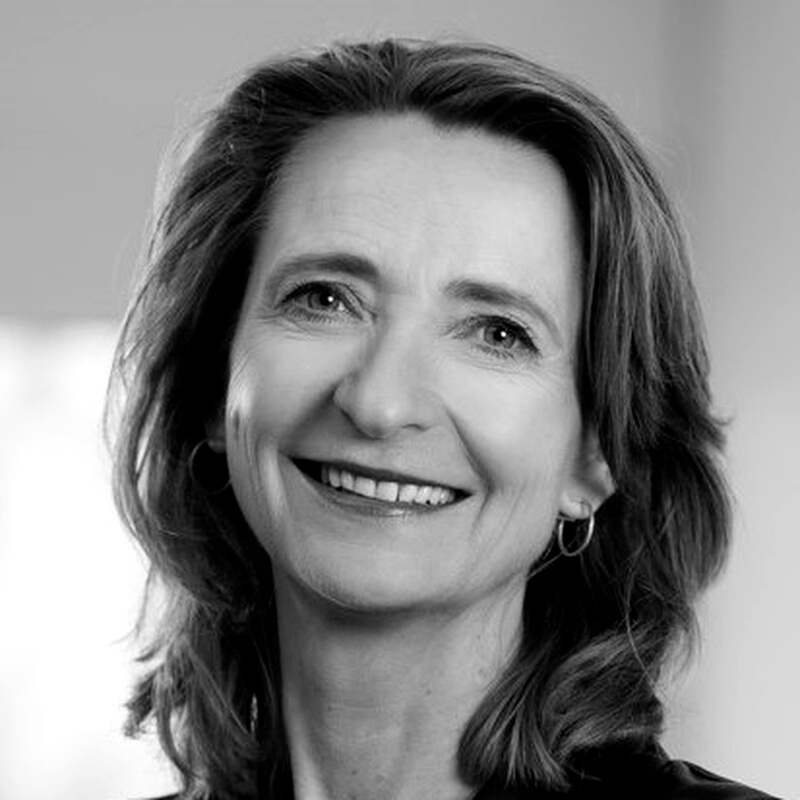

How Frederieke Leeflang embraces uncertainty through intuition, scenarios and resolve
What makes leadership effective in uncertain times? In a series of interviews, Odgers Netherlands shares insights and leadership lessons drawn from the experience of senior executives. In this conversation, Ed van der Sande and Sebijn Bunt speak with Frederieke Leeflang, former Chair of the Executive Board of NPO.
She began her career as a competition lawyer in Amsterdam’s Zuidas business district, became Chair of the Executive Board of Boekel De Nerée and, shortly afterwards, faced the financial crisis. Other executive and supervisory roles followed, including at ABN AMRO, and, after declining three times, the chairmanship of NPO. Each time, she entered unfamiliar territory. And each time, change was required.
For now, she has stepped back from executive roles. She serves as a non-executive director, including on a one-tier board in Brazil, and advises and teaches on governance and leadership. In conversation, it becomes clear that she listens closely to her intuition and has the confidence to act on it.
This is her story. And her way of setting a course when the way ahead is unclear.
Does it happen to you, or do you steer?
Looking back, Leeflang sees three significant turning points in her career. None was planned in detail. Yet she does not consider them a matter of chance.
Perhaps unconsciously, you are steering after all, because you sense that you are ready for something new. You are open to it, and then opportunities come your way.
She contrasts this with the career of someone who progresses within a single organisation over many years to reach the top. There is nothing wrong with that, she stresses. But according to Leeflang, there is a risk that, over time, people adopt the behaviours of those around them and lose some of the open-mindedness required to steer an organisation in a different direction.
It explains why she would rarely choose to take on a role in a stable situation. “You should not ask me primarily to come in and mind the shop, because I am not very good at that. I always create movement.”
Two kinds of uncertainty
An executive joining an organisation from outside faces two kinds of uncertainty. The first comes with the new role: learning the rhythm of the organisation and understanding where formal responsibility lies. The second is more difficult. It is the realisation that ultimate responsibility rests with you, in the midst of a transformation whose eventual shape can never be fully known. “You just sense that it has to happen.”
At that point, people expect you to forge a path and articulate clearly which direction the organisation should take.
Her first piece of advice for anyone joining from outside is to build a team around you with whom you can be yourself and share your doubts. Without such a team, she believes, it is difficult to carry that uncertainty.
How did she know she could make the transition from lawyer to executive? “You feel it.” When her name was put forward, there was scepticism too: she was just forty, and a woman. That scepticism mainly strengthened her determination. “You don’t walk away. If anything, it motivates you even more.”
Living through the scenarios
When the crisis hit the firm hard, Leeflang distinguished between three layers. The first is rational: what needs to be done? Lease out property, restructure the finances, part company with partners and appoint a new generation, introduce a new remuneration system. That, she says, is management work, and it requires disciplined execution.
The second layer is personal. When she had to present the plans to the group of partners, not all of whom wanted to support them, she developed a number of scenarios for herself. Four or five, including the final scenario: if the shareholders’ meeting did not approve the plans, the day after tomorrow she would have to go to the court across the road and, as a statutory director, file for bankruptcy. She did not merely think those scenarios through. She lived through them.
“I am very much guided by feeling. I am highly intuitive. So I naturally think: all right, that could happen, but would it really be so terrible? Yes, of course, in a sense it would be ‘dramatic’. But you can always go and sell flowers at the market or work on the checkout at Hema, I think to myself.”
That acceptance forms the third layer. “Scenario thinking gives you a sense of calm.” And from that calm come the courage and resolve to stand firm at a decisive moment and make things happen. The firm came through the crisis successfully and has since become part of Dentons.
Being responsible, but having no authority
At NPO, the situation was different. When a plan was developed to implement the recommendations of the Van Rijn Committee on social safety, a number of broadcasting executives indicated that they did not want to support it. The introduction of fixed terms for all executives was not well received either. Within the public broadcasting system, she was effectively responsible for everything, but had authority over nothing. In those circumstances, change becomes particularly difficult.
“You can only move an organisation in a particular direction if you also have the authority to do so.”
From this, she draws a lesson about the environments in which she is most effective. Politics and profit play a role in the Zuidas and in start-ups too. Yet what she sees there above all is a drive to improve things and move them forward. In an environment where people are driven much more by power, the dynamic is different. “Then it becomes about preservation, and that makes the game very complicated. That is something I have learned about leadership.”
She is candid about her own choices. Asked whether she should have left sooner, she says: “Yes, I should have said sooner: this is enough.” She stayed because she felt responsible for the people and the mission she represented.
That same sense of responsibility placed her in one of the loneliest positions of her career. When she felt that a line had been crossed at broadcaster Ongehoord Nederland, she was the first to intervene. For a long time, she stood alone, knowing that the outcome was anything but certain. “I knew it would be a long shot.” What sustained her was the conviction that it was the right thing to do. “This came from such a deeply held moral conviction.” Because the decision was rooted in her values, she could bear the loneliness and uncertainty. And when you take a stand in that way, she believes, you find that the people you need will eventually stand behind you.
The third column
Alongside internal and external uncertainty, Leeflang identifies a third: the media. For her, this presents a paradox. As an executive at the public broadcaster, she stood for independent, reliable journalism and the role of public media in society. At the same time, she experienced how the media could be used for what she describes as “self-interest”. When her integrity was publicly called into question and her family was affected, she drew a line.
“No matter how seasoned you are, no matter how good your team is, the media can break you.”
Today, she says, she can laugh about it. She is proud of the change she set in motion at the public broadcaster and says she came away with “so many lovely, good people” in her life.
There is no good leader without scars
“You cannot be a good leader without scars. This is not one scar. There are many.”
Leeflang sees a tendency in the Netherlands towards risk-averse appointments. Executives who have consciously put themselves on the line and learned from the experience are too quickly passed over. In her view, those are precisely the leaders who have the courage to make necessary decisions, even when those decisions have personal consequences. Resolve is an important quality, but no one can maintain it alone.
It requires an ecosystem. A team that complements you and is better than you in many areas. And a supervisory board that enables the executive board to function at its best. Where things go wrong, she often sees supervisors failing to step forward precisely when circumstances become difficult. “Those are the moments when you have to be there.”
“If you agree on an assignment together, then as a supervisor you are just as responsible for it.”
She also points to the importance of a personal ecosystem: at least three people in your phone whom you can call day or night, outside your family, who have no vested interest and are not being paid. “There is a degree of objectivity in that, while at the same time there is warmth.”
What she wants executives to take away
Anyone who comes to her for advice receives a straightforward message: have the courage to make choices, and do not do things simply because someone else thinks you should. And recognise that ambition comes at a cost. “You can’t do it all.” Every few months, she takes stock: does this still feel right?
She has not always maintained that balance. Her best mirror was her father, who died while she was at NPO. “Actually, I should have looked more closely in that mirror at the time.” Today, she makes more conscious choices, such as joining the board in Brazil: a dream she would never have realised in a full-time executive role.
What she would like to see more often is leaders openly saying that they do not know something. She prefers to speak of having the courage to be open rather than of vulnerability.
“That is often associated with not being in control, when in fact it only makes you more in control if, every now and then, you simply say: I don’t know.”
Because whatever uncertainty arises, the task remains the same. “You still have to steer through the fog. You still have to make decisions, and you have to have the courage to do so in that moment.”
Frederieke Leeflang shows that uncertainty cannot be planned away. She makes it manageable by living through scenarios, trusting her intuition and surrounding herself with people who help her stay on course when the pressure mounts.
Leadership in uncertainty begins with having the courage to trust what you feel.
That is the thread running through this conversation with Leeflang and through the conversations Odgers Netherlands holds each year with executives and boards. Those insights form the basis of this series and of the way we support organisations with their most important leadership challenges.
Would you like to know what that looks like in practice? Get in touch!
Never miss an issue
Subscribe to our global newsletter to discover our latest insights, opinions and featured articles.
Follow us
Join us on our social media channels and see how we're addressing today's biggest issues.