

Staying the course when everything shifts
7 min read
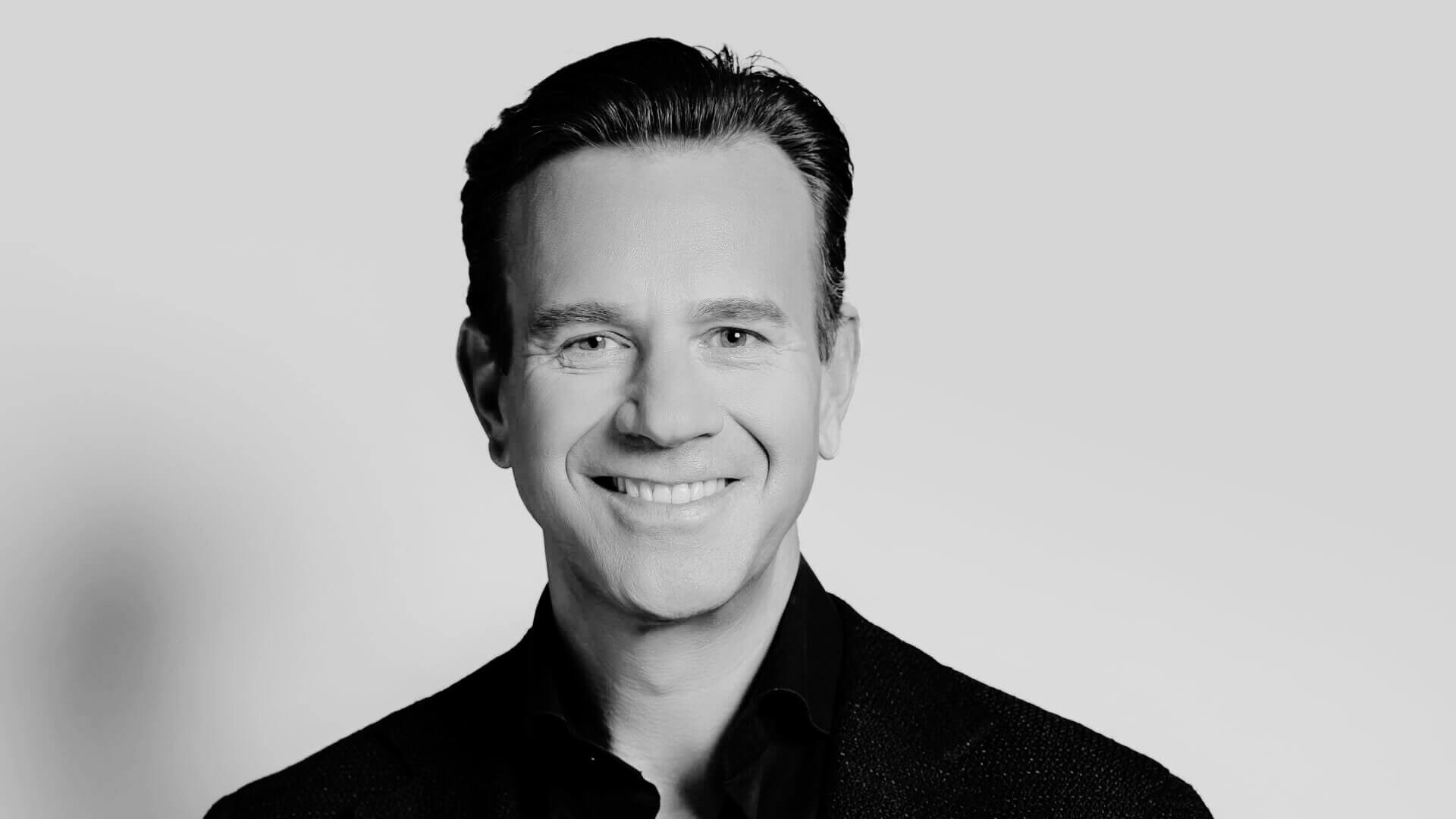

What makes leadership successful in uncertain times? In a series of interviews, Odgers shares inspiring insights and leadership lessons from the practice of senior executives. We begin with Sven Sauvé. He runs one of the most turbulent media companies in the Netherlands. Reorganisations, a derailed television programme, and both a failed and a successful merger followed one another in rapid succession. That period was further overshadowed by the violent murder of a colleague. An event that had a profound impact and left deep marks within the organisation and among the people who worked there. Against that backdrop, it is all the more remarkable that the company underwent significant growth during those same years, rising from 60 to 160 million euros in EBITA. Sven Sauvé, CEO of RTL Netherlands and now responsible for the combined broadcasting and streaming activities of DPG Media in the Netherlands and Belgium, is not someone who shies away from uncertainty. He has built a philosophy around it.
Let go of what you cannot control
When Sauvé took over as CEO, he inherited a company active across many areas — live entertainment, private equity investments, a multitude of divisions. At the same time, Netflix was storming the Dutch market and YouTube was already firmly established. His first move was not panic, but clarity. 'We focus entirely on video, across all relevant platforms. Everything else we stop.'
That decision implied a radical reorganisation. Several divisions and activities were divested. Almost the entire board was replaced, followed ultimately by more than 65 per cent of the senior management team. The culture had to change fundamentally. Everything at once, deliberately.
What kept him standing was not a risk-free plan, but a clear direction with a conscious acceptance of what lay beyond his control. 'There are a great many things you cannot control, but you can always hold on to a purpose.' That purpose became "touching the Dutch in heart and mind, with local stories" — a purpose that never became a marketing slogan. It did, however, become the daily filter for decisions, staffing choices, and prioritisation.
You throw three balls into the air at once. And then you have to make sure they all land well.
Loyal to the future, not the past
One of the most striking principles Sauvé applies sounds simple, but requires courage in practice: be loyal not to the past, but to the future. In concrete terms, this means that someone who has performed excellently for years may no longer be the right person for the next phase.
'If you know what your strategy is and what you want to achieve, then you have to make choices about the people in your team.' He speaks about it without cynicism. There is room for dignity: parting ways 'in a very human way'. But the decision itself is neither delayed nor avoided out of loyalty to the past.
He expects that same loyalty to the future from himself. Now that he has become part of DPG Media, he recognises that he must have the courage to revisit decisions he himself has made. 'At first you adjust the policies of your predecessor. Now I have to correct my own decisions. I actually find that quite an interesting new phase.' The self-reflection is not a pose — for Sauvé, it is a professional disposition.
The last thing you should do as a leader is believe in your own choices of yesterday. That strikes me as deeply unwise.
Deciding without knowing everything
Sauvé does not believe in the CEO as an all-knowing authority. In a world that moves too quickly and is too complex, it is an illusion to think that one person masters all areas of knowledge. His answer: surround yourself with people who are better at their craft than you are, and create the conditions under which they can perform at their best.
That requires a specific kind of self-confidence. Not the self-confidence that says 'I know', but the self-confidence that says 'I don't need to know'. Once all perspectives are on the table and the right people are present, he makes the decision. 'That is then the responsibility that comes with it.'
Diversity in his team is not an HR objective but a strategic choice. 'Ten years ago I would probably have surrounded myself with five lookalikes of myself — easy to communicate with. Now I have as many different personalities and backgrounds in my team as possible. In my view, that makes decision-making so much better.'
Do yourself a favour: surround yourself with the best people. That remains the most important piece of advice.
The moral compass as a decision-making instrument
The most far-reaching decision Sauvé made as CEO was not the most difficult: pulling The Voice of Holland from air mid-broadcast season, after receiving a seven-page letter containing serious allegations. The decision was made within five minutes.
From the outside, it appeared to be a difficult decision — one involving major commercial interests, an iconic programme and public repercussions. For him, it was a no-brainer. 'If we cannot guarantee the safety of vulnerable candidates, then you should no longer want to broadcast it.' No weighing of interests, no further analysis: the moral compass pointed the way.
What followed was a prolonged crisis with societal impact he had not foreseen. But he never doubted the decision itself for a moment. 'Even if only ten per cent of the letter we received at the time from the programme Boos were true, we would still have an incredibly serious problem.'
That willingness to act swiftly and decisively on the basis of values, even when the consequences are significant, is not heroism according to Sauvé. It is the result of knowing who you are and what you stand for. 'You already know, really.'
The power of pause — reflection as leadership
In an assessment, Sauvé once received feedback that stayed with him: the power of pause. The idea that the most effective leaders are not those who make the most decisions, but those who regularly take a step back to survey the whole picture.
He has internalised this as a practice. He reads, he travels, he speaks to people from other industries. 'The media industry is very inward-looking. We think that everything in media is different. That is simply not the case.' Stepping outside one's own bubble is, for him, a professional discipline, not a luxury.
His team has worked for many years with an external adviser on team dynamics and individual coaching. Not as a one-off intervention, but as ongoing maintenance. 'You need outsiders to hold up a proper mirror to yourself. Analysing yourself as a company is quite a complex undertaking.'
Throw those doors open. Listen to a podcast, watch a documentary, take a trip. The outside-in perspective is not a side matter — it is the core for me.
Staying grounded: the power of the ordinary
Behind the executive is a man born in Nuenen who consciously embraces his sense of grounding. Entrepreneurial friends who jokingly call him a 'wage slave'. A mother who rings him and asks whether he might be better off stopping when work becomes unsettled again. A Brabant family that reminds him of what truly matters. And a Flemish partner who, in the beginning, has no real idea what he does.
'Family and friends. They are my foundation and keep me grounded. Because at the end of the day, it is just work. That may sound like a cliché, but that is genuinely how I see it.' These are words that, with the benefit of hindsight, take on a deeper meaning. Peter R. de Vries walked out of the studio after the recordings and was murdered outside. An event that shook the Netherlands profoundly, but which was also experienced within the organisation as a defining rupture. For Sven, it marked a turning point: the moment at which the responsibility of his role extended to the safety of people — and sometimes, he came to realise, to life and death itself.
That he remains so firmly grounded is no coincidence. It is the result of deliberately maintaining the things that exist outside of work. He keeps himself physically fit: exercising two to three times a week, getting enough sleep — not tracked via an app, but felt. 'I can tell for myself whether I have slept well.' His dismissiveness towards gadgets is telling: he trusts his own perception, including when it comes to himself.
What he wants to pass on to executives
When asked what he would pass on to other leaders, Sauvé is direct. Change is the only constant, but everyone knows that. What he adds is more urgent: the pace of that change is accelerating, and AI will fundamentally reshape the media industry and well beyond. 'The internet democratised distribution. AI democratises the creation of content itself.'
His advice is not technological but human. Gather the very best people. Put all perspectives on the table. Think hard about what is coming your way. Set your course. And do not forget to enjoy the journey.
But above all: remain loyal to the future. Have the courage to correct. Yourself included. Communicate continuously, even when there is nothing to report. And know what you stand for, so that in the moment of truth you can act swiftly.
Staying the course despite everything. That is ultimately what hard work means.
Sven Sauvé has demonstrated that leadership in uncertainty is not a matter of knowing everything or controlling everything. It is the combination of a sharp compass, a diverse team, the courage to correct course and the wisdom to know that, ultimately, it is just work.
Leadership in uncertainty begins with knowing what you stand for.
That is the common thread in this conversation with Sauvé and in the conversations that Odgers Netherlands holds annually with executives and boards of directors. Those insights form the basis of this series and of the way in which we support organisations in addressing their most important leadership challenges.
Curious about what that looks like in practice? Get in touch.
Never miss an issue
Subscribe to our global newsletter to discover our latest insights, opinions and featured articles.
Follow us
Join us on our social media channels and see how we're addressing today's biggest issues.