

Keep going until you win
9 min read
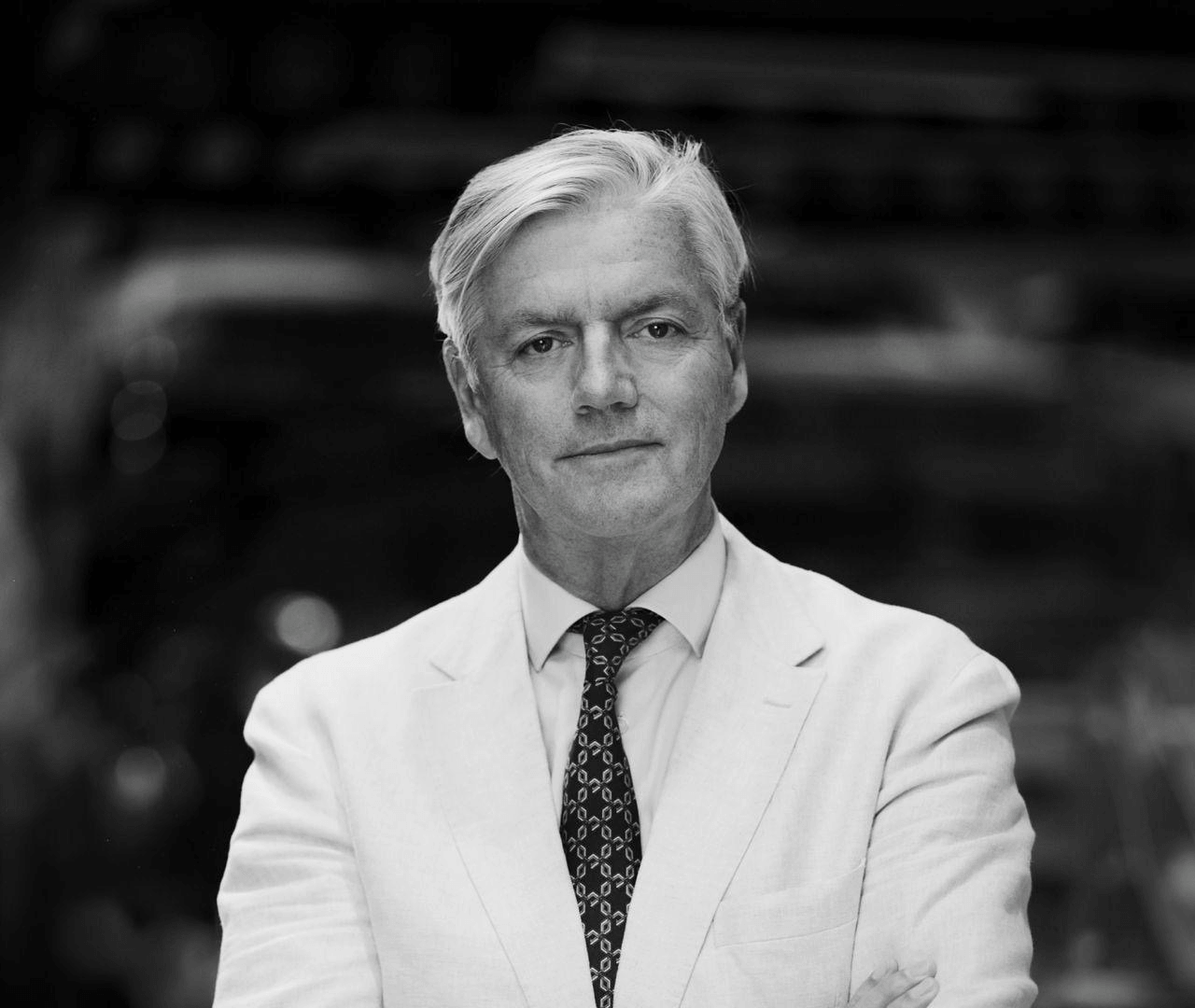

How Victor Muller leads through conviction and sheer tenacity
How does leadership take shape when uncertainty sets the tone? In this series, Odgers Netherlands explores different leadership perspectives through conversations with senior executives. Not as a blueprint or a judgement, but as a window into how leaders deal with pressure, risk, decision-making under strain and responsibility. In this conversation: Victor Muller.
He bought Saab from General Motors for 400 million dollars, of which 50 million dollars in cash, at a time when the brand already looked all but lost. For years he fought battles on multiple fronts: with governments, suppliers, creditors and a sceptical public opinion. He then stood trial in Gothenburg, and won. Now he is rebuilding Spyker, with 25 people and cars in the very top segment.
This is his story. And his philosophy on living with uncertainty.
Let go of what you cannot control
The first time he found himself deep in trouble — at Saab, under fire from every direction — Muller fell back on something he had heard at the age of 25. A Harvard psychologist, hired by the US military, had studied why some soldiers kept acting in emergencies while others froze. His conclusion was compact: those able to isolate a problem and put it in perspective stop it from taking over everything. Not by ignoring it, but by containing it. That way, what else is still going well stays visible, and there remains room to act. Those who cannot do this lose their sense of the bigger picture.
Muller recognised himself in that description, but not as someone who had learned the technique. He already had it. What the lecture did was give him language for something that was already present in him, unconsciously. Since then, he has applied it deliberately. For Muller, dealing with uncertainty starts with a strict distinction between what lies within his own influence and what does not. That perspective can sound sharp and rational, but it forms the core of his stress-resistant leadership style.
There are problems so large that you can't do anything about them. The war in Iran — the three of us can't change anything about that. So there's no need to stress about it, because you can't change it anyway.
But for those who don't have that distinction built into their system, the lesson itself is of little use. That distinction — between what lies within and outside one's own influence — runs through his thinking on leadership under uncertainty like a common thread.
Fear as a compass, not a brake
There is a limit to managing stress, and Muller is clear about it. Those who feel no fear become reckless. Those who are overwhelmed by it stop acting. He argues for neither extreme. He deliberately places himself somewhere in the middle — and regards that not as a merit, but as a given.
There's no training school for it whatsoever. The people who can handle it keep making decisions. The people who can't, leave.
In his own teams, he saw the pattern time and again: under extreme pressure, a quick sorting of the wheat from the chaff takes place, not along lines of hierarchy or experience, but of resilience to stress. Young people with no title who kept fighting day after day, while people with more seniority dropped out. That taught him something about team composition and executive leadership: don't surround yourself with the most experienced people, but with the toughest.
He draws a leadership conclusion from this too: if you place someone in a role that doesn't match their resilience to stress, you carry the responsibility yourself when it goes wrong. That is not a mistake by the employee. It is a misjudgement by the leader.
If you put someone who can't take risks in a position where they have to, it's not their fault when it goes wrong. It's mine. I should never have put him there.
The hardest moment — Saab and collective loss
Of all the moments in his career, the Saab period was the toughest. Not because of the financial loss — he could rationalise that — but because of the direct human responsibility involved. At the lowest point, he was the only one who still wanted to carry on. His main concern was not the balance sheet but the people.
That's not 3,700 people, that's 12,000. They just came to work. And at a certain point, they simply didn't get paid for a while. That was the real source of stress.
His response was total openness. No filtered messages, but direct conversations. Cards on the table, we're in this together. His reasoning: anyone who makes the situation look better than it is undermines the trust he needs at that moment.
When it was over, he called everyone together and addressed them. No slipping out the side door. The conversation ended with a standing ovation. He found the recording again years later, on a memory stick. He found it hard to watch.
It's just defeat. But I had the guts to look people straight in the eye and not leave through a side door. We have put up a serious battle. It didn't work.
Conviction as a leadership tool
Muller is described as an incurable optimist. He recognises the label but immediately qualifies it: optimism is a mechanism, not an attitude. And every mechanism has its limits. Those who are too optimistic become reckless. Those with too little of it stop acting before they've even begun.
What he distinguishes from blind optimism is the communicative function of conviction. In Muller's leadership style, doubt is not shared widely, but actively contained. He sees conviction as a tool for bringing people along: staying the course, purposeful, with the inspirer explicitly cast as the leader steering the way. For him, this is not a matter of honesty or dishonesty, but a deliberate choice in how he handles doubt under pressure.
You can never radiate leadership if you say: yes, but it could also go completely wrong. Hey guys, I'd think twice about it. You can't function that way.
The choice for Saab also illustrates the flip side of his powers of persuasion and optimism. He knew the red flags, heard the warnings about dependency on the Swedish government — and went ahead anyway. The lesson he draws from it is concrete and permanent: never again a deal in which he is structurally dependent on a government. One coalition today, another tomorrow — that variable is uncontrollable. That is not regret. That is a rule.
Name, reputation, and bearing the consequences
Anyone following Victor Muller's public record sees a name that has been tarnished in certain circles. A bankruptcy, a criminal charge in Sweden, years of public criticism. He shrugs it off — and that is not a pose. It is the result of a deliberate choice about where to spend his energy.
If you let yourself be swayed by what others think of you, you start basing your decisions on 'people'. Then you become a pleaser. Then you can't chart your own course.
The court proceedings in Gothenburg lasted two years. He fought the charge and won outright. He characterises it himself as: unpleasant, instructive, won. He values challenge mainly for its substantive character: the best experts, the best risk analysts, people who sharpen scenarios and consequences. Those he actively seeks out. But feedback on his person or professional impact seems to steer him rather less. What comes through is above all someone firmly convinced of his own course.
90% of people, on their deathbed, regret 'if only I had'. Not me. I've done everything. Has it always worked out well? No. Regret? Certainly not.
What he wants executives to take away
Now he is rebuilding Spyker. With 25 people, a workshop, and cars in the very top segment. He doesn't call it a new adventure, but unfinished business. The only difference from before is that he now knows how it works, and what he never wants again. At 66, he knows the runway is not unlimited. That makes focus a necessity.
His team consists of 25 people. He approached seven of the best people who had ever worked for him. According to Muller, all they asked was: when can I start? He chose them on craftsmanship and character alike. Muller has made them one promise: no more Saabs, no more Formula 1 teams. Just building beautiful cars. That promise is also for himself.
I hate losing so much that I keep going until I win. You just have to be sick and tired of it enough. That's really all there is to it.
When asked what he wants to pass on to other leaders, he is brief. No model, no step-by-step plan. But an attitude that is relevant to executive leadership: decide with what you know, accept what you could not foresee, and seek out people who sharpen your judgement. In the end, you set the direction yourself.
Chart your own course. Don't let yourself be driven mad. No regrets over things you couldn't have known. And surround yourself with the best advisers — people who don't tell you what to do, but show you what the trade-offs are.
Victor Muller shows what leadership under uncertainty can look like when driven by conviction, unwavering resolve and a sharp distinction between what lies within and outside your influence. Not as a recommendation, but as a profile of a leadership style that occurs in practice, with the risks and outcomes that, in this case, went hand in hand.
That is the common thread in this conversation with Muller — and in the conversations Odgers Netherlands holds every year with executives and boards. Those insights form the basis of this series and of the way we support organisations on executive search, leadership questions and the composition of leadership profiles.
Leadership under uncertainty can also look like this: sticking to your own course, until you win.
Curious what that looks like in practice? Get in touch!

Never miss an issue
Subscribe to our global newsletter to discover our latest insights, opinions and featured articles.
Follow us
Join us on our social media channels and see how we're addressing today's biggest issues.