Financial Services
5 min read
Traversing the Financial Industry Through War and Market Volatility
24/10/2025


7 min read
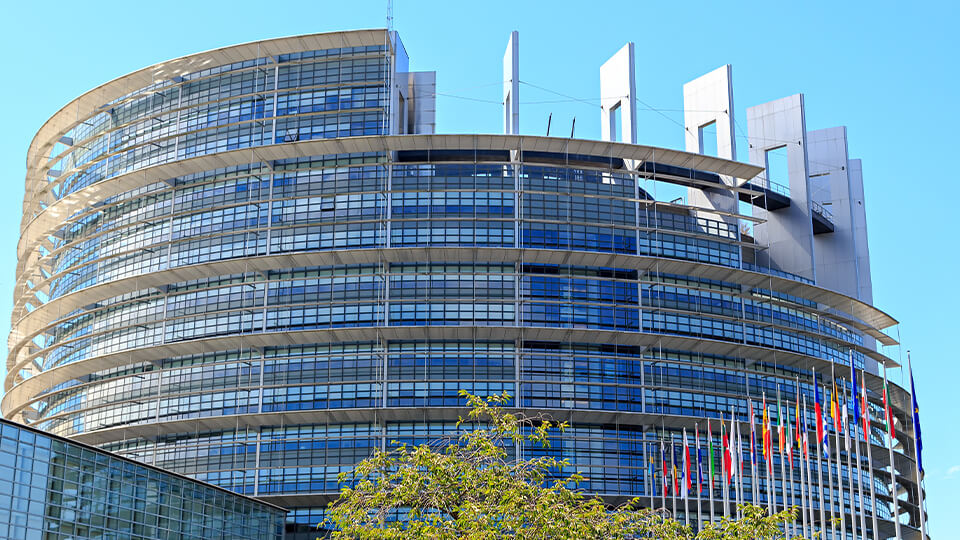

The scale of geopolitical uncertainty has significantly reshaped decision-making, risk management, capital allocation, talent, client relationships and organisational resilience.
As part of our ongoing discussions with members of the Association of Foreign Banks, Odgers spoke with a select group of CEOs and CROs to understand how geopolitical risk is changing the leadership agenda. Participants represented institutions operating in the UK with headquarters across Europe, North America, Asia-Pacific and the Middle East.
The conversations revealed five key themes.
The first observation was unanimous: geopolitical risk has risen sharply up the executive agenda.
For some institutions, geopolitical developments have become a standing item in board and executive discussions. For others, they are now embedded in quarterly emerging risk reviews alongside cyber, operational resilience and non-financial risk.
One CEO described geopolitical risk as "front and centre" of day-to-day management discussions. Another noted that while it had always been present, it had become significantly more consequential over the past 12 months.
Beyond the frequency of geopolitical events, what has changed is their direct connection to business outcomes. Leaders emphasised impacts on supply chains, energy markets, client behaviour, capital flows, funding markets, exposure to sanctions and operational resilience.
Several leaders observed that geopolitical events rarely remain isolated. Their influence spreads through markets and institutions in ways that are difficult to predict.
As one CRO put it: "We're rarely dealing with a first-order risk. The real challenge is understanding the second and third-order effects."
The implication is that geopolitical risk is viewed less as a standalone category and more as a driver of multiple interconnected risks.
Perhaps the strongest theme from the discussions was the growing focus on second-order effects. Participants consistently distinguished between the triggering event and its eventual consequences.
Few expressed concern about their ability to identify major geopolitical developments, but said that the greater challenge lies in understanding how those developments will affect customers, sectors and markets in both the short and long term.
Examples included:
One CEO noted: "We are seeing the shocks. The outcomes are often slower and harder to identify."
Another observed that credit portfolios had not yet experienced the full impact of the current conflict, raising concerns about lag effects still working their way through the system.
This distinction is changing the nature of risk leadership. Success increasingly depends on anticipating indirect consequences rather than responding to immediate events.
A decade ago, geopolitical developments might have appeared periodically on risk registers, whereas now they are firmly established as a board issue.
Several leaders cited the invasion of Ukraine as a turning point. Others pointed to more recent developments in the Middle East and growing tensions around global trade and tariffs. One CEO reflected: "That was the catalyst that brought it onto the board agenda. Since then, it has continued to move up the list of priorities."
Importantly, boards are increasingly recognising that geopolitical developments have implications far beyond financial performance. Participants highlighted implications for employee safety, workforce wellbeing, operational continuity, reputation and client confidence.
Several leaders described significant effort being devoted to supporting employees with family connections to conflict-affected regions and ensuring balanced decision-making across global organisations. Geopolitical risk has become as much a leadership challenge as a risk management challenge.
A notable finding was that institutions are not responding by becoming uniformly more cautious. Many leaders emphasised the importance of maintaining commercial discipline while remaining alert to changing conditions.
Several participants outlined the opportunities created by uncertainty as well as the risks. One CEO observed: "In our business, we run towards the flare-ups rather than away from them." While not every institution shared that perspective, many described how geopolitical disruption is creating new patterns of trade, financing needs and client demand.
Others pointed to increased hedging activity, changing capital flows and demand for risk management solutions. One leader argued that institutions operating in historically volatile environments often possess capabilities that are increasingly valuable globally.
Institutions need leaders who can operate effectively in ambiguity, assess second-order consequences and make decisions without complete information. This ability is a competitive advantage in its own right.
While AI featured prominently in discussions, most participants described adoption within risk functions as very limited. The overwhelming majority viewed AI as a promising capability rather than a mature solution.
Few organisations reported significant use of AI in risk analysis or geopolitical scenario modelling. As one leader commented: "It is collating information. It is not analysing it."
Another observed: "You've got to be clever enough to use it. It does not replace the level of intelligence needed to interact with it."
Several participants described AI as useful for simplifying information, monitoring regulatory developments and improving reporting processes. However, most stopped short of trusting it with complex judgement calls, viewing it also as a source of risk. As one executive put it: "Technology may help us process more information, but the challenge remains interpreting what matters and understanding the implications."
Several participants expressed concerns about data quality, governance, explainability and cyber vulnerability, as well as over-reliance on technology.
What will define success?
When asked what success in managing geopolitical risk will look like over the next two to three years, discussions consistently returned to three areas:
The leadership implication
The most important insight from these discussions is that geopolitical risk is no longer confined to risk functions. It is shaping strategy, talent decisions, investment priorities and organisational resilience.
As geopolitical uncertainty becomes a more permanent feature of the operating environment, the distinction between leadership and risk management is becoming less clear.
The institutions best positioned to succeed will be those that develop leaders capable of responding, adapting and making sound decisions in conditions of uncertainty.
For boards, CEOs and CROs alike, geopolitical risk has become less about forecasting events and more about building organisations capable of operating effectively despite them. The key differentiator will be whether organisations develop the leadership capability, judgement and resilience to respond when it arrives.
_______________________________________________
Odgers provides integrated executive search and leadership advisory services. We are deeply rooted in our local markets, which we combine with global perspective and reach to help organisations build transformational, world-class leadership teams.
Get in touch. Follow the links below to learn more, or connect directly with our dedicated executive search experts and Financial Services leadership consultants at your local Odgers office here.
Geopolitical risk refers to the impact that global political events, conflicts, trade tensions, sanctions and international instability can have on organisations. According to leaders interviewed by Odgers and the Association of Foreign Banks, geopolitical risk now directly affects strategy, capital allocation, talent, client relationships and organisational resilience, making it a core leadership concern rather than a specialist risk topic.
Geopolitical developments can influence supply chains, energy markets, funding conditions, capital flows, client behaviour and exposure to sanctions. Leaders highlighted that the greatest challenge is often understanding how these developments create wider consequences across markets, sectors and customer portfolios over time.
Participants described geopolitical risk as a board-level issue because its impact extends beyond financial performance. Boards are increasingly considering implications for employee safety, workforce wellbeing, operational continuity, reputation and client confidence, particularly during periods of international conflict and economic uncertainty.
The discussions highlighted the importance of judgement, adaptability and clear communication. Organisations need leaders who can operate effectively in ambiguity, assess second and third-order consequences, and make informed decisions without having complete information. These capabilities are increasingly viewed as a source of competitive advantage.
While many organisations see potential in AI, participants reported that its use within risk management remains limited. AI is currently viewed as helpful for monitoring information, simplifying reporting and tracking developments, but most leaders do not yet trust it to make complex risk assessments or strategic judgement calls without human oversight.
Participants consistently identified three priorities: anticipation, adaptability and leadership capability. Successful organisations will be those that can look ahead to emerging risks, respond quickly as conditions change, and develop leaders with the judgement and resilience needed to navigate uncertainty effectively.

Subscribe to our global newsletter to discover our latest insights, opinions and featured articles.
Join us on our social media channels and see how we're addressing today's biggest issues.