

What Makes an Effective RemCo Chair?
7 min read


We discuss with nine FTSE 100 Remuneration Committee Chairs (RemCo Chairs) how to remain successful amidst growing complexity, tightened governance standards, heightened investor scrutiny and shifting market dynamics.
The 2025 AGM season marked a notable rebound in shareholder dissent on remuneration-related proposals. 12.1% of FTSE 100 remuneration report votes were contested - up from 7% in 2024, though still below the 20.2% peak in 2023. This resurgence likely reflects renewed efforts by companies to increase executive pay amid growing concerns about the widening UK pay gap across sectors and geographies.
Persistent questions around fairness, particularly the perceived misalignment between executive compensation and broader workforce pay, continue to shape investor sentiment. RemCo Chairs are increasingly caught between competing expectations from shareholders, regulators, internal stakeholders and business need.
The discussions revealed how the role is evolving in response to investor expectations, the essential skills and experience, and the new capabilities now needed.
How have pressures on RemCo Chairs evolved in the last five years?
Shifting Governance and Compliance
Regulatory expectations have intensified. The revised UK Corporate Governance Code 2024 introduced changes which have raised the bar for transparency and accountability, placing greater pressure on RemCo Chairs to ensure compliance while balancing business needs. Conversely, The Companies (Directors’ Remuneration and Audit) (Amendment) Regulations 2025 streamlined disclosure, thereby significantly reducing administrative burden.
These changes have had impact, evidenced by a number of FTSE 100 companies in the 2025 AGM season revising their remuneration policies, including increasing quantum, reducing deferral periods, and some have adopted more hybrid schemes. Yet these amendments reflect a broader pattern of continual change and evolving priorities.
One RemCo Chair told us: “The environment keeps shifting. Whilst we get what appears to be changes that make things easier, these are balanced against an increase in regulatory demands that seem at odds with the market. You really have to keep up.”
Proxy Agency Influence
While the Code sets the framework, some proxy advisors can exert disproportionate influence over voting outcomes, resulting in many shareholders following their recommendations with limited regard for business context or company explanations.
The RemCo Chairs we spoke to agreed it is the investor base that drives the tone and priorities of remuneration decisions, which makes these challenges all the more troubling.
“There has to be openness and pragmatism around recognising the realities of corporate life. Very often we just get a ‘computer says no’ from the shareholders, which is hugely disruptive,” reflected one RemCo Chair.
Talent Market Pressures
The global war for talent has intensified, adding complexity to remuneration strategies. UK norms on executive pay differ markedly from those in other markets - particularly the U.S. - making it increasingly difficult to attract and retain top talent in sectors competing with American benchmarks. Industries reliant on U.S. talent face acute challenges in bridging pay disparities.
Sector-Specific Scrutiny
Remuneration is increasingly sector-sensitive, with consumer-facing businesses employing many minimum-wage workers facing intense scrutiny over fairness and pay equity amid rising societal expectations and investor activism.
The RemCo Chairs we interviewed noted that, given the nuances of sector dynamics and investor profiles, there is limited value in comparing approaches across industries. Each context presents unique challenges, underscoring how individual and bespoke the role of the RemCo Chair has become.
What does this mean for RemCo Chair role requirements?
A More Strategic Role on the Board
The RemCo Chair position is now a higher-profile, strategic role requiring close collaboration with the Board Chair. It provides a unique vantage point across the organisation, requiring not only deep governance expertise but also a strong grasp of business context and commercial priorities.
As one RemCo Chair said: “Remuneration focuses on what are we trying to achieve culturally, strategically, and what will deliver the commercial aspirations of the business. The role gives you a real breadth of perspective across the whole business.”
Closer Interaction with Shareholders
RemCo Chairs must ensure executive rewards are closely aligned with performance and defensible to shareholders. This requires robust consultation, as any change demands extensive engagement and clear evidence.
Investors increasingly expect tailored remuneration policies, while many shareholders still rely on proxy advisors with limited direct engagement. To overcome this, RemCo Chairs need a proactive approach - building early, frequent and meaningful relationships with shareholders so that decisions are understood and gain support.
“I think the most important role for a RemCo Chair is understanding shareholders and what they’re trying to achieve across their holdings and effectively aligning and communicating your business requirements with this.”
Closer Interaction with Executives
Internally, RemCo Chairs must demonstrate resilience and clarity, fostering trust with leadership and HR teams while navigating sensitive dynamics. They are expected to explain why market realities constrain pay flexibility directly and guide executives through this complexity to avoid tension.
“You have to be quite tough with leadership internally. You should be clear on what you are doing but help the executives realise you are on their side, whilst also not conceding to their wishes,” added one RemCo Chair.
“Supporting the executive position, and being seen to be doing so, is an important lever to gain support. Sometimes you need to get a ‘bloody nose’ from shareholders on something just to prove you’ve got the execs interest front and centre,” reflected another.
Higher Time Commitment
The role is more demanding than ever. Today, FTSE 100 RemCo Chairs only hold one remuneration chair role on average, and have an overall portfolio of just two public company roles.
What was once a periodic policy review has evolved into an annual cycle of consultation and adjustment, requiring substantial time and focus, as two RemCo Chairs commented:
“You cannot take on too many. It’s difficult to keep your head straight. There is a lot of work, a lot of consultation, and things keep changing.”
“It is a huge time commitment. The job has gone from policy review every three years or massive punctuation points such as CEO change, to consulting every year. If you are a sizeable company, it is a significant time commitment.”
What skills do good RemCo Chairs have?
Today’s RemCo Chairs must combine deep technical expertise with diplomatic skill and exceptional communication. They require the ability to craft persuasive arguments for change, reconcile competing stakeholder interests and synthesise complex, often contradictory forces into clear priorities.
Agility, resilience and courage are essential. RemCo Chairs must bring a clear vision, flexibility to navigate uncertainty and the capacity to build consensus around practical solutions.
The role is highly visible and often personal, demanding fairness, approachability, and a thick skin, as reflected:
“Effective remuneration chairing relies on having your finger on the pulse of the organisation, keeping the board and the executive with you, and being firm but fair when needed.”
“You have to have excellent diplomatic skills and the ability to create a compelling argument for change.”
“I think RemCo Chairs need to be brave. It is a very visible role, and it can get very personal.”
Strong networking capabilities are critical. Effective RemCo Chairs engage regularly with stakeholders inside and outside the organisation, maintaining a constant understanding of the market and business sentiment. They must demonstrate courage in balancing governance pressures with genuine business need and be committed to the best outcome for the business.
Commented another RemCo Chair: “You need to have a clear vision whilst being comfortable with a margin of flexibility.”
“It’s important to keep your north star whilst coming up with a view that will find its way through the middle. You need massive agility and an ability to get multiple stakeholders on side.”
Advice for the Board Chair
- When recruiting RemCo Chairs, seek individuals who not only bring technical and relevant expertise but also demonstrate the right leadership style, cultural fit, and interpersonal skills to build trust quickly.
- Make succession planning for the RemCo Chair a priority. This avoids instability during unexpected transitions and enables the successor to build relationships first as a NED before stepping into the RemCo Chair role.
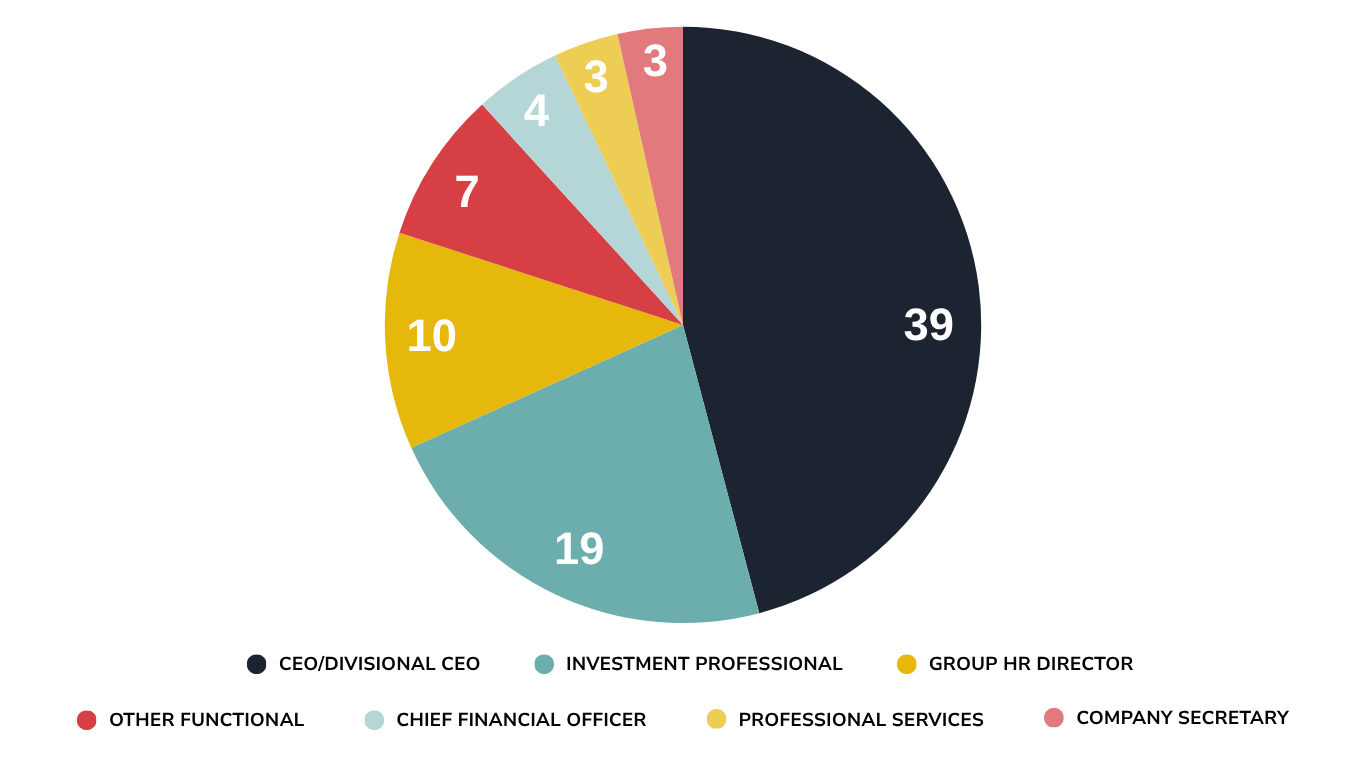
- Creativity in sourcing talent is essential. Boards should broaden their search to consider individuals with backgrounds in business leadership, HR, investor relations, finance or professional services who can navigate complex remuneration challenges.
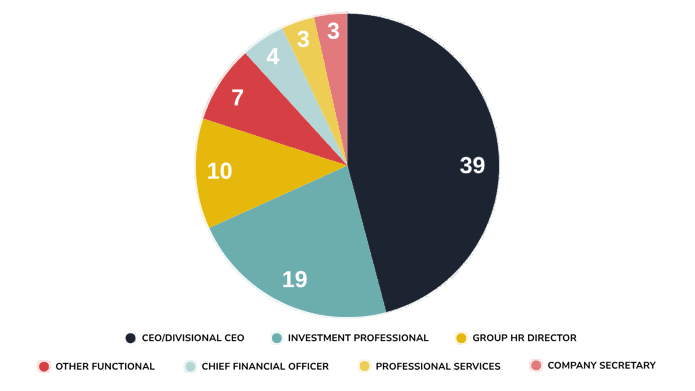
Executive Backgrounds of Current FTSE 100 RemCo Chairs
For those who can master its complexity, the RemCo Chair role offers significant influence and unique insight into what drives business success, as one concluded: “It is not an easy role but if you love why businesses succeed and operate the way they do, this is a great place to be.”
Given the increasing complexity of remuneration governance, Odgers leverages its extensive cross‑sector network to identify and appoint Remuneration Chairs with the judgement, credibility and regulatory insight boards now require.
Thank you to our contributors:
- Susan Kilsby, RemCo Chair, Diageo plc & Unilever plc.
- Maria Antoniou, RemCo Chair, Spirax Sarco Group plc.
- Wendy Becker, RemCo Chair, GSK plc.
- Sybella Stanley, RemCo Chair, Smith & Nephew plc.
- Jacky Simmonds, RemCo Chair, Bunzl plc.
- Charlotte Boyle, RemCo Chair & SID, Coca-Cola HBC AG.
- Carl-Peter Forster, RemCo Chair Babcock International Group plc.
- Sharmila Nebhrajani, RemCo Chair, Severn Trent plc & ITV plc.
- Lena Wilson, RemCo Chair, NatWest Group plc.
________________________________________________________
With 58 offices in 33 countries, Odgers' deep industry expertise combined with global reach and local nuance, builds transformational leadership teams with world-class talent.
Get in touch. Follow the links below to learn more, or connect directly with our dedicated executive search experts and Board and Chair leadership consultants at your local Odgers office here.

Never miss an issue
Subscribe to our global newsletter to discover our latest insights, opinions and featured articles.
Follow us
Join us on our social media channels and see how we're addressing today's biggest issues.