


CFO & Financial Management
2025 CFO & Audit Chair Dinner: Market Optimism From London Stock Exchange CEO
5 min read
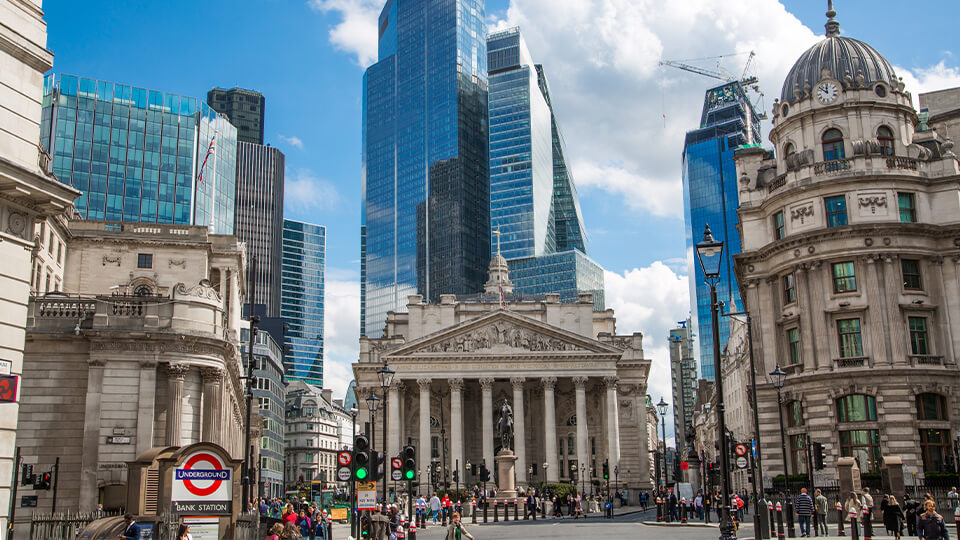

While UK capital markets were in need of regulatory reform and domestic capital support, new approaches bring welcome assurance.
Dame Julia Hoggett, CEO of the London Stock Exchange, was invited to attend Odgers’ 2025 Annual CFO and Audit Chair dinner as our guest speaker. With record attendance, the event brought together over 350 of the UK’s leading CFOs and Chairs to discuss perspectives into the listed world, the attractiveness of our capital markets and the need for greater re-investment in UK businesses.
Dame Julia presides over one of the oldest and most consequential market infrastructure institutions in the world and is a tireless advocate for London’s capital markets, having led through both crisis and reform.
Attractive Capital Markets
The discussion outlined the many remarkable strengths London’s capital markets have to build on, something which is not always recognised.
The UK has company formation rates that rank third globally, has four universities in the world’s top 10, and produces more consequential research per capita than any other nation. In most years, more unicorns are formed here compared with anywhere outside the U.S. and China, and the UK offers a world leading multi-asset capital market by any measure.
Since January 2024, London has raised more than twice the capital of any other European exchange, remaining the largest exchange in Europe and has been the only European venue in the top 10 by capital raised every year for the last decade.
Since January 2024, Dame Julia outlined that $50 billion equivalent of equity capital has been raised and year to date, double the volume of IPO capital from 2024.
AIM remains the largest growth market in Europe, then second only in the world to Shenzhen, and has seen the largest single fundraising ever on AIM this year.
UK’s Legal System And Reform
The robustness and quality of the UK’s legal system, which underpins countless contracts around the world, remains a key strength. However, these markets hadn’t been refreshed in years to incentivise risk capital for businesses driving jobs, tax revenue, and value creation. Listing rules and regulations had grown increasingly outdated, failing to reflect how companies operate today. Ultimately, Brexit became a necessary jolt and a profound trigger for change.
Post-Brexit, Parliament looked at the burden of financial services law and decided it would be more appropriate to give more rulemaking power to the regulators and oversee its discharge. This created the potential for a streamlined policy processing for the UK’s wholesale markets not experienced in the previous 20 years. If consensus in the ecosystem with politicians, regulators and civil servants could be created, the UK would be in a position to create more change at pace than ever before.
Creation Of A Taskforce
The question then was, how do you create that consensus? By bringing together those who have capital with those who need it, stock exchanges act as the convenor of capital and the conversation, which resulted in the creation of the Capital Markets Industry Taskforce (CMIT) in 2022 to generate that consensus.
It brought together issuers, investors and intermediaries to shape the UK’s capital markets by creating the optimal environment for companies to start, grow, scale and stay in the UK.
Five Fingers And A Glove
The first agenda of CMIT was described as ‘five fingers and a glove’.
The five fingers constituted:
- The quality of the UK’s primary and secondary capital raising rules.
- The availability of high-quality sell-side research.
- The availability of domestic risk capital invested in UK private, quoted and public companies.
- Corporate governance, stewardship and remuneration.
- The ecosystem for scaling consequential private companies, for you cannot have consequential public or quoted companies without first having consequential private companies.
The ‘glove’ represented the culture change needed to celebrate success, risk taking, and the creation of consequential businesses that provide jobs, generate tax revenue and address societies challenges.
Capital & Culture And The Call For Re-Investment
With the implementation of so much regulatory reform in the last two years, CMIT’s agenda has evolved into the strongly connected ‘two C’s’ - capital and culture.
Most countries treat their domestic capital markets as a source of national economic security, understanding the importance of directing domestic capital into home nations’ companies in order to promote growth.
The UK has been an under-investor in itself as a nation, with low levels of domestic investment in private and public companies, and infrastructure. Given the huge engine for growth the UK is, there is fortunately a growing collective opinion that more domestic investment should be directed into the country.
The 2025 CFO and Audit Chair Dinner underscored both the UK’s revered strengths and the pressing need for renewal in its capital markets. To secure our position as a global leader in growth and innovation, we must move to embrace a mindset of clear-sighted optimism.
Just as successful CEOs combine relentless positivity with practical action, the UK must do the same by investing in its own future, fostering confidence, and creating an environment where ambition and boldness are commended. Connect with Odgers to ensure your organisation is positioned to thrive through exceptional leadership.
The Odgers team would like to thank Dame Julia warmly for her address and responding to the discussion.
________________________________________________________
Get in touch. Follow the links below to discover more, or contact our dedicated Board and Chair leadership experts from your local Odgers office here.

Never miss an issue
Subscribe to our global newsletter to discover our latest insights, opinions and featured articles.
Follow us
Join us on our social media channels and see how we're addressing today's biggest issues.