

Digital & Technology
From Data to Decisions in Seconds: Felix Beissel on AI Impact and Leadership in the Age of Agents
7 min read
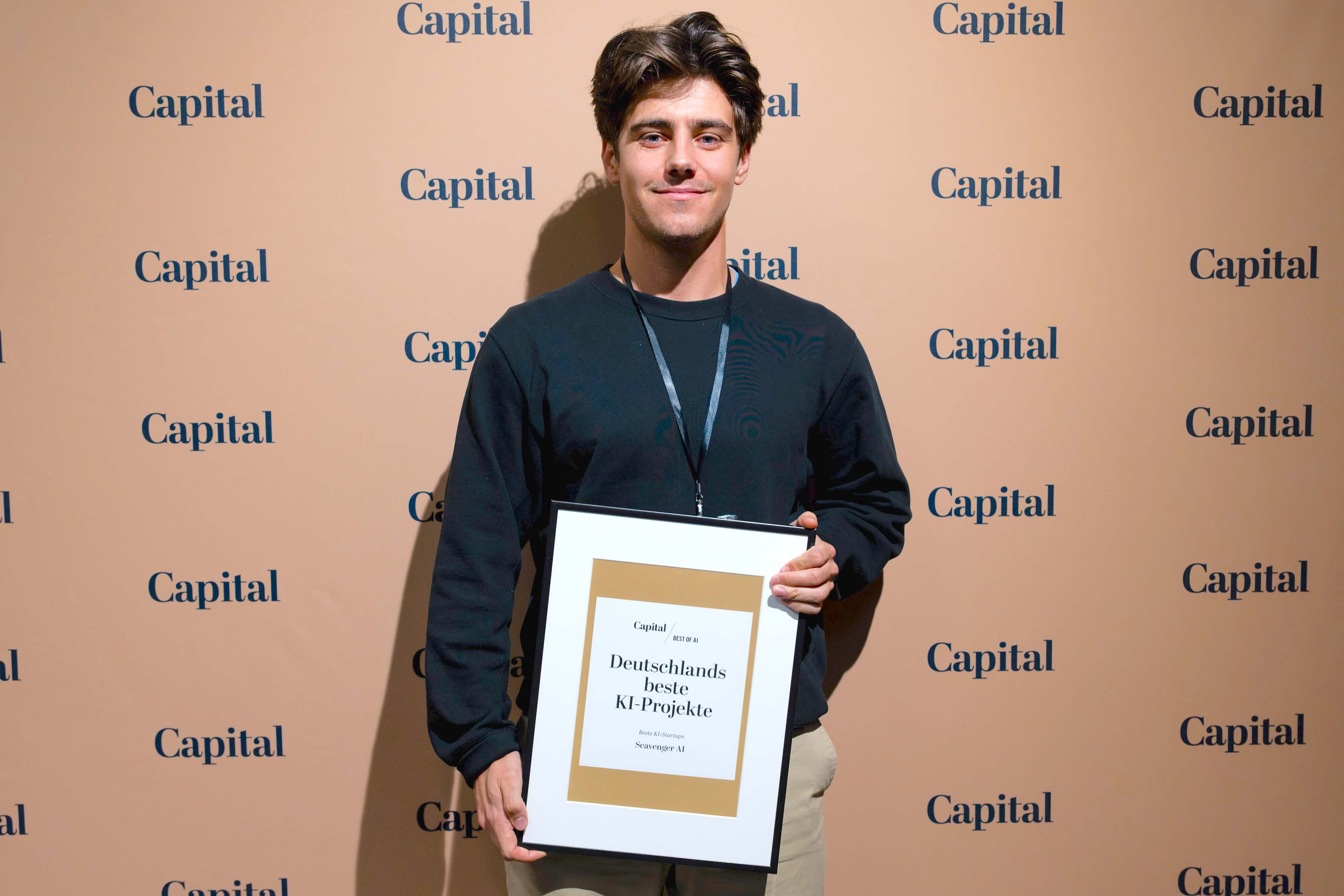

Felix Beissel speaks with Markus Trost, Partner at Odgers, about how companies can translate AI into measurable business impact. The conversation explores operational execution, leadership in the age of AI agents, and why real leverage often lies beyond the algorithm itself.
How do companies turn AI into real business impact—beyond pilots and tool enthusiasm? Felix Beissel, recognized at the Capital Best of AI Awards, takes a clear stance: data should not just be analyzed, but translated into reliable decision-making insights within seconds.
He explains why the biggest leverage in practice often lies not in the algorithm itself, but in clean business logic and clear data ownership. He outlines why leadership in the AI era means creating clarity around goals, empowering the “average user,” and consciously investing in human-to-human interaction—even as AI agents become increasingly capable.
The interview demonstrates that sustainable competitive advantage does not come from ever more complex models, but from disciplined execution, measurable impact, and a leadership mindset that takes both technology and people seriously.
Your career in the field of artificial intelligence is impressive. What was the pivotal moment that led you to pursue this path as a leader? And when was the moment you deeply regretted it?
My co-founder Max and I met in a café in Milan in early 2023 and started thinking about what it would take to bring the convenience of ChatGPT to data analytics for business decisions. That was the pivotal moment. We then built up a team from an initial angel investment, raised our pre-seed round, and launched the product to market for 2025.
Since then, it has grown from a pure text-to-SQL solution into a full EU-based analytics platform. And we have grown as leaders in building our team and deploying to customers. So absolutely no regrets as such. The biggest learning has been about the importance of business logic management around a data source. It's where we've brought the most new features recently and what's top of my mind as we continue developing the product.
Leading is always related to transformation and development. Could you please be so kind and describe the company from this perspective as an environment you are operating in? How did the company manage to make AI a strategic priority and a commercial success?
We've gone through transformations ourselves (from a two-person idea into a team shipping an analytics platform), but since we’re AI first, AI has always been the priority. For our customers, either AI is already a strategic priority or it isn't. When it is, the most enjoyable part of the job is going from initial data connection to full rollout with customers who already have a pressing problem on their hands. When it isn't (rare), we invest heavily in education around the topic. It's never too late to start.
You have been recognized by Capital as one of the top AI leaders in the DACH region. In your opinion, what makes leadership in the field of Data & AI special, and what aspect are you particularly passionate about?
It feels like being in university with no curriculum. New tools keep coming to be learned, and the most important capability in my view is to level up the average user. For example, we don't need to talk about ML forecasts if you can't get your sharepoint to sync. We try to be as basic as needed when attacking problems, that's where the efficiency gains are largest and this is what I’m passionate about.
We don’t need to talk about ML forecasts if your SharePoint doesn’t sync — the biggest efficiency gains are usually in the basics.
As a leader in such a dynamic field as AI, how do you inspire your stakeholders in top management and your team? And what strategic vision have you aligned them with?
As a founding team of an early-stage startup, we're constantly navigating many options for our product and market direction. Our job is to carve out 2-3 clear metrics for the team to optimise. Revenue growth and response accuracy, for example. We keep these goals present in all planning meetings. If everyone knows all the goals all the time, we're doing a good job.
As founders, our job is to define two or three metrics so clearly that everyone in the team knows them at all times.
How does the company master the challenge of implementing and scaling successful use cases? Can you please share an example?
In our use case, by far the biggest deceleration comes from poor data quality, undocumented business logic, or a lack of data ownership. With a cosmetics customer, for example, we were able to forward-deploy engineers to help figure those issues out. And we learned that data is most of all a people business, since most business data is human-made. From those learnings, we’ll be launching more onboarding AI agents for an end-to-end flow within the product.
Data is ultimately a people business, because most business data is human-made.
You have been successful in the AI field for quite some time. How will this technology change leadership? And how will your leadership specifically evolve over the next three years?
AI agents represent an efficiency gain in prototyping, brainstorming, learning, and problem-solving, which in theory should leave more time for human connection, the quality that many studies show makes leaders effective.
Oddly, in practice I see a default for even less connection as human responses are relatively less valued compared to AI responses (AI has become that good).
As of today agents still fall short in evoking emotions and changing people's minds. You don't change someone without positive emotions and most agents are too confirmatory compared to a real conversation with another person.
So I believe this is where leadership comes in: We will do more problem-solving ourselves with AI, but when it comes to building conviction, visions, and setting goals, we should be ready to invest in human-to-human interactions. It’s what I’ll do.
AI agents make us faster at solving problems — but conviction, vision, and goal-setting must still be built through real human conversations.
As a successful participant in the second cohort of the “Best of AI-Award", have you experienced positive effects from your participation?
Absolutely! It gave the team a big boost and we have received inbound requests from potential customers or candidates directly because of the award and the article in Capital Magazin.
Mr. Beissel, thank you very much for the insightful conversation!