

Financial Services
Leading Through Uncertainty: Calm as a Foundation, Agility as a Goal
5 min read
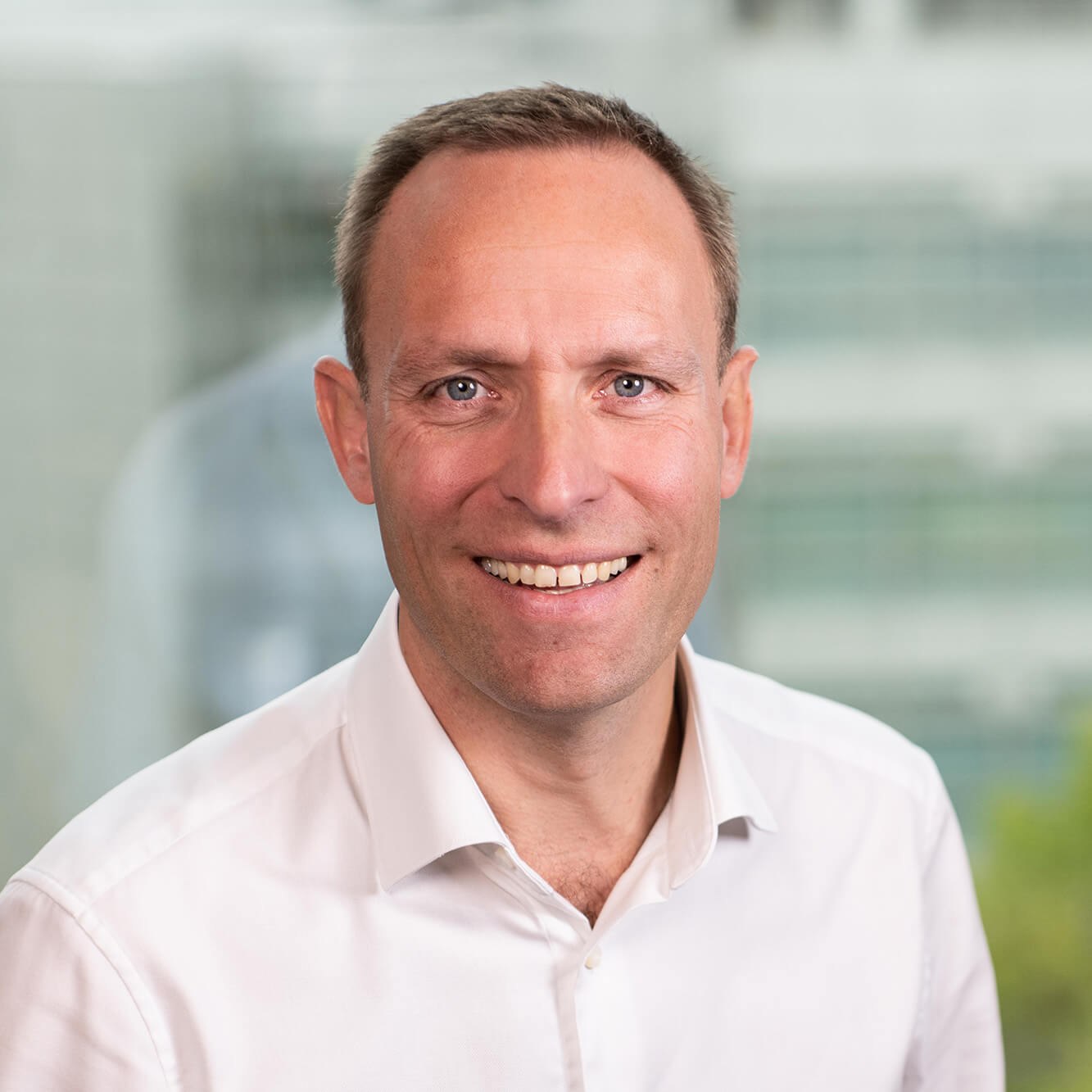

Leading through uncertainty is one of the most defining competencies in today's leadership landscape. But what does it concretely demand of a leader, and how do you build that capacity structurally? For Bram, Partner at Odgers, the answer starts with three interconnected elements: quality, focus, and consistency. Not as an endpoint, but as a professional foundation. His career illustrates how unexpected experiences, deliberate self-awareness, and a critical approach to learning come together in effective leadership under pressure.
What unexpected turn in your career shaped you into the leader and advisor you are today? How does that experience help you navigate uncertainty?
"One of the defining turns in my career was the opportunity to go to the Middle East with EY. It came completely out of the blue, but I seized it immediately for the adventure, the challenge, and the different culture.
That period turned out to be an intensive training ground in consultancy. I worked with diverse clients, sectors, and cultures, had direct access to boards and supervisory directors, and carried full personal accountability.
That experience taught me to deal with uncertainty by constantly switching between contexts, cultures, and expectations. It forced me to act independently, trust my own judgement, and adapt to every new situation. The knowledge and experience I built there still form my foundation today: knowing that I can add value in complex situations."
Which leadership quality do you consciously draw on when circumstances change or become complex? How do you see this reflected in your work with clients and candidates?
"The quality I consciously apply is maintaining calm: thinking and analysing first, then acting. This goes hand in hand with consistent behaviour — keeping focus on quality and the long term, and filtering out the noise that inevitably arises in changing circumstances. I developed this quality by working across different countries, with many different clients and on many different assignments.
In practice, I see this in my work with clients, candidates, and colleagues: during search processes, I don't get swept up by changing circumstances. I stay calm, work consistently, and hold on to core values such as quality, respect, and integrity. The goal remains central, even when the context is complex or unpredictable."
In which area do you want to grow or experiment yourself this year?
"By nature, I am more someone who embraces change than drives it. Given the pace of developments in technology, geopolitics, and macroeconomics, I want to develop this year into someone who gets ahead of change more actively: thinking more proactively about what new developments mean and how they can affect our work. To do this, I will be speaking with executives from other sectors to explore what we can learn and apply to our profession.
I also want to become more flexible in my management style. My strengths lie in consistency, stability, and structure — but that also brings a certain seriousness with it. By creating more space for lightness, I want to develop further, knowing that results will be achieved."
Calm as a foundation
Bram's story shows that a strong leader is not always the one with an immediate answer, but the one who maintains calm, stays focused, and demonstrates consistent behaviour. Leading through uncertainty demands self-confidence, stability, resilience, and agility. The fact that he is now actively looking at development and broadening his perspective is a seamless extension of that.
At Odgers, we believe the best advisors keep moving, keep asking questions, and bring others along on that journey. Do you recognise these challenges, or would you like to exchange thoughts on leadership in complex circumstances? Get in touch with Bram.
Never miss an issue
Subscribe to our global magazine to hear our latest insights, opinions and featured articles.
Follow us
Join us on our social media channels and see how we're addressing today's biggest issues.