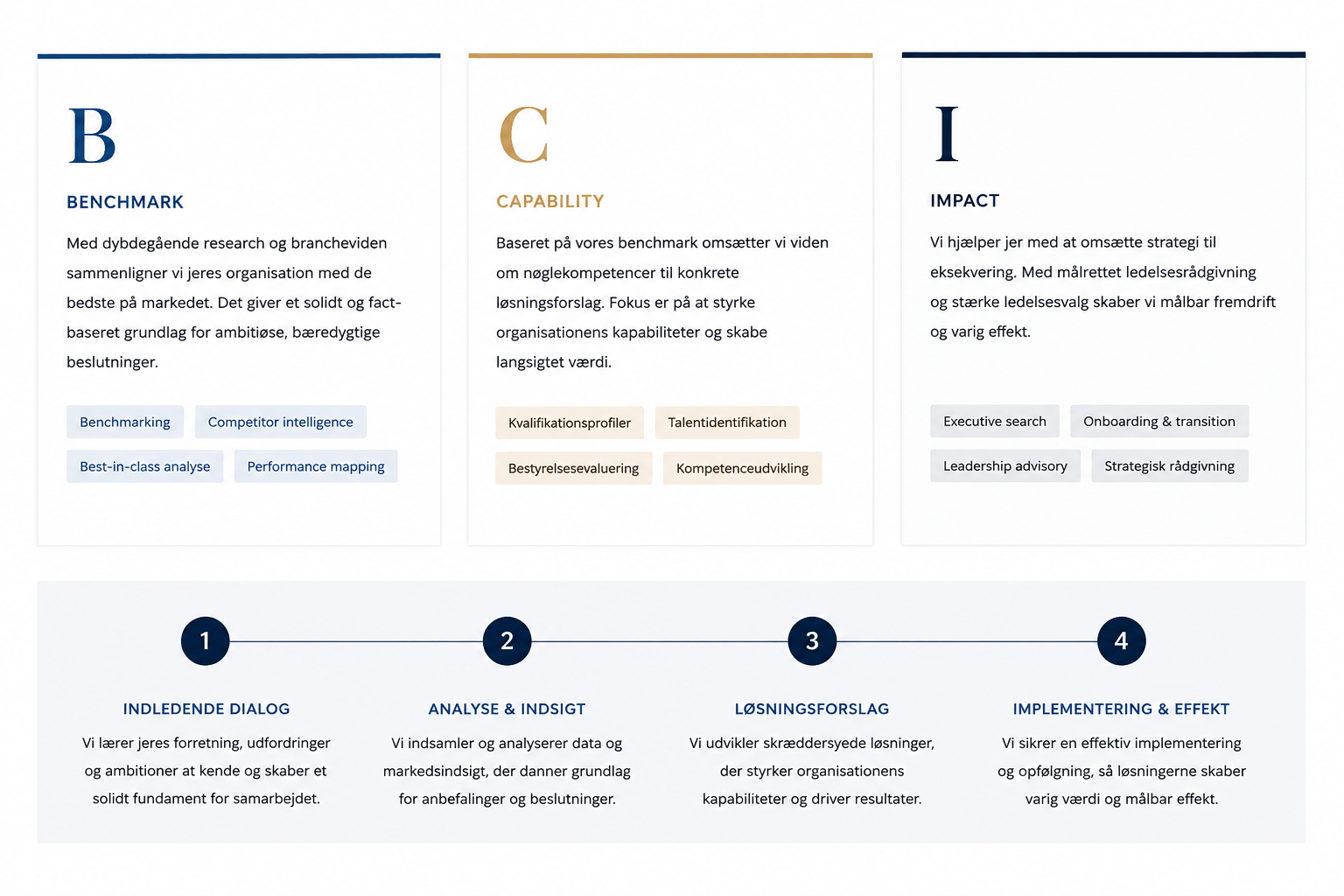
B – Benchmark
What defines a relevant benchmarking framework?
BCI™ is built on a comprehensive dataset of comparable foundations, placing your remuneration level in context across size, purpose and structure.The focus is not merely on general levels, but on ensuring a comparison that is truly relevant to your specific foundation.
This establishes a strong reference point, enabling a more informed and consistent evaluation.
Includes, among other factors:
- Foundation size
- Geographic scope
- Purpose and grant-making profile
- Benchmarking against relevant foundations
C – Complexity
What is the real responsibility inherent in board work?
Not all foundation boards are comparable. BCI™ takes into account the factors that drive complexity in board work – and which should be reflected in the level of remuneration.
The model evaluates the overall board mandate across a range of key factors - including activity, structure and regulatory requirements – to provide a clear and accurate picture of what the role entails in your specific foundation.
This ensures that remuneration is not determined by size alone, but reflects the true level of responsibility and workload.
Includes, among other factors:
- Grant-making volume
- Commercial activity
- Board structure
- Regulatory responsibility
I – Impact
What are the consequences of the chosen remuneration level?
The chosen level of remuneration has implications that extend well beyond compensation. BCI™ evaluates the broader effects of remuneration levels - whether set too high or too low.
The model provides insight into how remuneration influences the foundation’s ability to attract and retain relevant competencies, while ensuring a balanced approach to reputation, governance and external expectations.
As a result, determining board remuneration becomes not just a question of level, but of consequence and long-term impact.
Includes, among other factors:
- Ability to attract talent
- Reputation and legitimacy
- Regulatory exposure
- Strategic capacity