

Digital & Technology
Transforming a Traditional Industrial Business: Mirko Mondan on AI, Leadership and the Future of Value Creation
6 min read
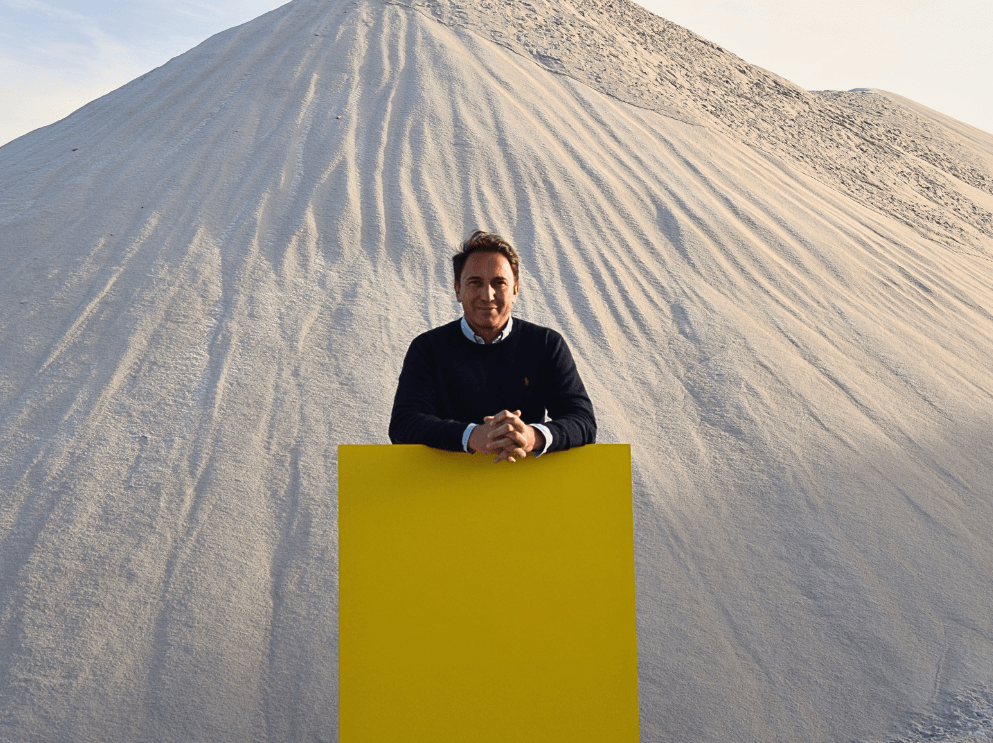

How can a traditional industrial company successfully step into the age of artificial intelligence? Mirko Mondan, CEO of Gebrüder Dorfner GmbH & Co. Kaolin- und Kristallquarzsand-Werke KG, has been driving the digital transformation of the long-established family business for several years. In conversation with Markus Trost, Partner at Odgers, he reflects on the courage required to explore new technologies early on, the evolving role of leadership in times of technological disruption, and why AI is ultimately less about technology itself and more about mindset, culture, and responsibility.
Your career in the field of artificial intelligence is impressive. What was the pivotal moment that led you to pursue this path as a leader? And when was the moment you deeply regretted it?
I have always believed that progress begins with the courage to explore what is new. From the moment the internet started to redefine how companies operate and connect across borders, I was drawn to the power of technology to create change.
Progress begins with the courage to explore what is new. For us, engaging with AI early was not just an experiment, but a strategic decision about the future of our company.
That same instinct is what led me, already toward the end of the 2010s, to explore its possibilities and question how this emerging technology could create practical, meaningful value for business. But first, I needed to understand what was truly at stake.
As I traveled around the world, participated in tech and business events, spoke with peers from diverse ecosystems, and immersed myself in books, analyses, and reports, this understanding only grew deeper. I began to see both the challenges ahead, the immense opportunities, but also the real cost of not engaging early with AI as a business leader.
My “AI journey” coincided with my joining Gebrüder Dorfner in 2020, where one of my core responsibilities was to help transform an over-a-century-old company into the intelligent era: to understand what this shift truly means in practice, to organize a sustainable transition, and to support our stakeholders’ strategic decision to move toward a more technology-open future.
From the very beginning, together with a small but committed group of colleagues, I chose to take a bold leap and explore how this powerful, game-changing technology could be integrated into our operations. For a family-owned, mid-sized German business, this was a defining moment, one that required courage, curiosity, and a willingness to learn far beyond our traditional expertise. It demanded a shift in mindset and the readiness to leave the familiar territory of “how things have always been done.” We entered uncharted waters, tested new approaches, developed new skills, and, above all, embraced the unknown.
A few years later, in July 2025, we celebrated Gebrüder Dorfner’s 130th anniversary. Just three months later, we stood in Berlin as finalists at the Capital Best of AI Awards 2025, receiving the “AI Leadership Award – Leader Mittelstand.” Moments like these reaffirm that our early commitment to AI was not only the right decision, but a crucial and timely one for our long-term future.
And as for the second part of your question, I have no regrets. Not because everything was easy, but because meaningful transformation always comes with challenges. They are part of the journey, not a reason to look back.
Leading is always related to transformation and development. Could you please be so kind and describe the company from this perspective as an environment you are operating in? How did the company manage to make AI a strategic priority and a commercial success?
Dorfner’s progress was possible because our stakeholders acted with foresight. They supported a thoughtful shift toward a more varied business model alongside mining operations, adding an extra layer of resilience to our core business while enhancing our innovation potential and horizons. They also understood early on that leading the company into a new era required a concrete plan, a long-term vision, and the courage to invest meaningfully in our transformation.
This commitment demanded not only responsibility but also deep expertise. Alongside decades of accumulated experience, we brought in new knowledge, new talent, and new capabilities to support our evolution, a process that continues today.
As part of this transformation, AI became a strategic priority. We identified high-impact areas where AI could drive efficiency, innovation, and new commercial opportunities. By investing in AI talent, technology, and partnerships, we embedded intelligent solutions across operations, turning data into actionable insights and enabling scalable business models. This approach not only strengthened our decision-making but also became a key differentiator in the markets where we operate.
Today, Dorfner is far more than a mining company. It has become a vibrant, forward-looking organization operating across diverse ecosystems, spanning geographies and industries. We are breaking traditional silos, bringing together departments that once worked separately, and creating new collaborative environments where people think, experiment, and innovate beyond conventional boundaries; leveraging AI as a key enabler of this new way of working.
You have been recognized by Capital as one of the top AI leaders in the DACH region. In your opinion, what makes leadership in the field of Data & AI special, and what aspect are you particularly passionate about?
Leadership in AI is unique because it demands equal mastery of technology, people, and purpose. As organizations move from pilots to full-scale deployment, AI will challenge our values, our readiness, and our ability to adapt. And only those who lead with conviction, strategy, and clarity of purpose will unlock its full transformative potential.
What drives me personally is the responsibility as bussiness’ leader to ensure that AI serves people; to help shape a future in which technology amplifies human capability and elevates human potential instead of replacing it.
Leadership in AI demands equal mastery of technology, people, and purpose. Only those who lead with conviction, strategy and clarity will unlock its full transformative potential.
As a leader in such a dynamic field as AI, how do you inspire your stakeholders in top management and your team? And what strategic vision have you aligned them with?
In practical terms, inspiring people begins with challenging myself every day to lead with clarity, consistency, and direction. This transformation has been built on bold and decisive steps: implementing successful use cases, embracing continuous improvement, fostering nonstop learning, introducing new roles and operating models that fit the intelligent era, and working with a strategic plan that is long-term in its direction yet agile in its execution to remain relevant and tackle techonogical, geostratigical and geopolitical shifts.
These elements help to turn the strategic vision into practice as they constantly reshape our collective mindset, including my own, and cultivate a culture that embraces innovation, experimentation, and learning, even when setbacks occur.
How does the company master the challenge of implementing and scaling successful usecases? Can you please share an example?
Scaling AI requires far more than deploying smarter tools. It demands a coordinated transformation across people, culture, and structure.
At Dorfner, we have approached this systematically. We moved early, invested in learning, created new roles, and aligned our strategy around clear priorities. This gave us the foundation to move from pilots to real, scalable impact.
A notable example is our ongoing transition from predictive systems to AI agents. In the early stages, we concentrated on use cases that could enhance quality and efficiency, such as forecasting material properties, finding the best compositions, and reducing development time, material usage, and environmental impact, thereby laying the foundation for broader, transformative applications. These early wins built confidence and provided the momentum needed for broader adoption.
Today, we are working for the responsible development of the next stage: multi-agent systems that can not just analyze or recommend but act autonomously. We are examining how such systems could efficiently connect data across silos, flag risks before they materialize, and map cause-and-effect chains in real time. This will allow our teams to make faster, more informed decisions and create entirely new ways of working, offering a whole new portfolio of products and services from the industry, to the industry, and beyond.
You have been successful in the AI field for quite some time.
How will this technology change leadership? And how will your leadership specifically evolve over the next three years?
Over time, and through my engagement with AI, it has become clear that what we are witnessing is far more than a technological revolution. It is, perhaps foremost, a development that underscores how AI’s challenges are fundamentally societal, cultural, and leadership-driven. This means we are facing also a profound leadership challenge, possibly the greatest one business leaders have encountered in recent years, because it demands the boldness to act decisively, the vision to look beyond the immediate, and the integrity to ensure that what we build ultimately serves the greater good.
At the same time, the very definition of success is changing. In an era shaped by geopolitical and geoeconomic turbulence, technological disruption, and constant shifts across industries, what counted as business success only a few years ago already feels like ancient history. AI accelerates this pace even further. So while we should celebrate our achievements, we must also recognize that this is not a sprint. It is a marathon; one that demands endurance, continuous learning, and genuine resilience.
On a personal note, this award, beyond being an honor, serves as a reminder of the responsibility we carry. It reinforces that our task as leaders is to guide with courage, think with foresight, and ensure that AI becomes a force for progress, inclusivity, and human advancement.
Looking ahead, leadership must evolve alongside this transformation. It must become more agile, more open and collaborative, and more deeply anchored in purpose. And of course, it must be exercised with a strong sense of responsibility, not only towards the people we lead today, but also the generations who will live with the systems and decisions we create.
True leadership is about choosing to take ownership of the future rather than merely reacting to it. This is the essence of leadership in the age of AI.
True leadership is about choosing to take ownership of the future rather than merely reacting to it. To me, this is the essence of leadership in the age of AI.
As a successful participant in the second cohort of the “Best of AI-Award” have you experienced positive effects from your participation?
Absolutely! Standing alongside such exceptional finalists was more than just recognition; it was a profound source of motivation. It confirmed that we are on the right path and inspired us to move forward with even greater determination, focus, and clarity of purpose.
It also sends a strong signal to the ecosystems in which we operate: that we are ready to elevate the dialogue, initiate meaningful collaborations, and create win-win situations that benefit not only our company, but also our partners, our industry, and the broader community around us.
I want to express my sincere thanks to the organizers of the awards, the jury, and everyone involved in shaping this initiative.
Their dedication, professionalism, and constructive feedback are truly invaluable. They not only make this award possible but also encourage all of us to keep pushing boundaries, to innovate responsibly, and to advance AI in a way that creates meaningful, lasting impact.