

Technology is Strategy: Tobias Guenthoer on Speed, AI, and New Leadership Responsibilities
7 min read
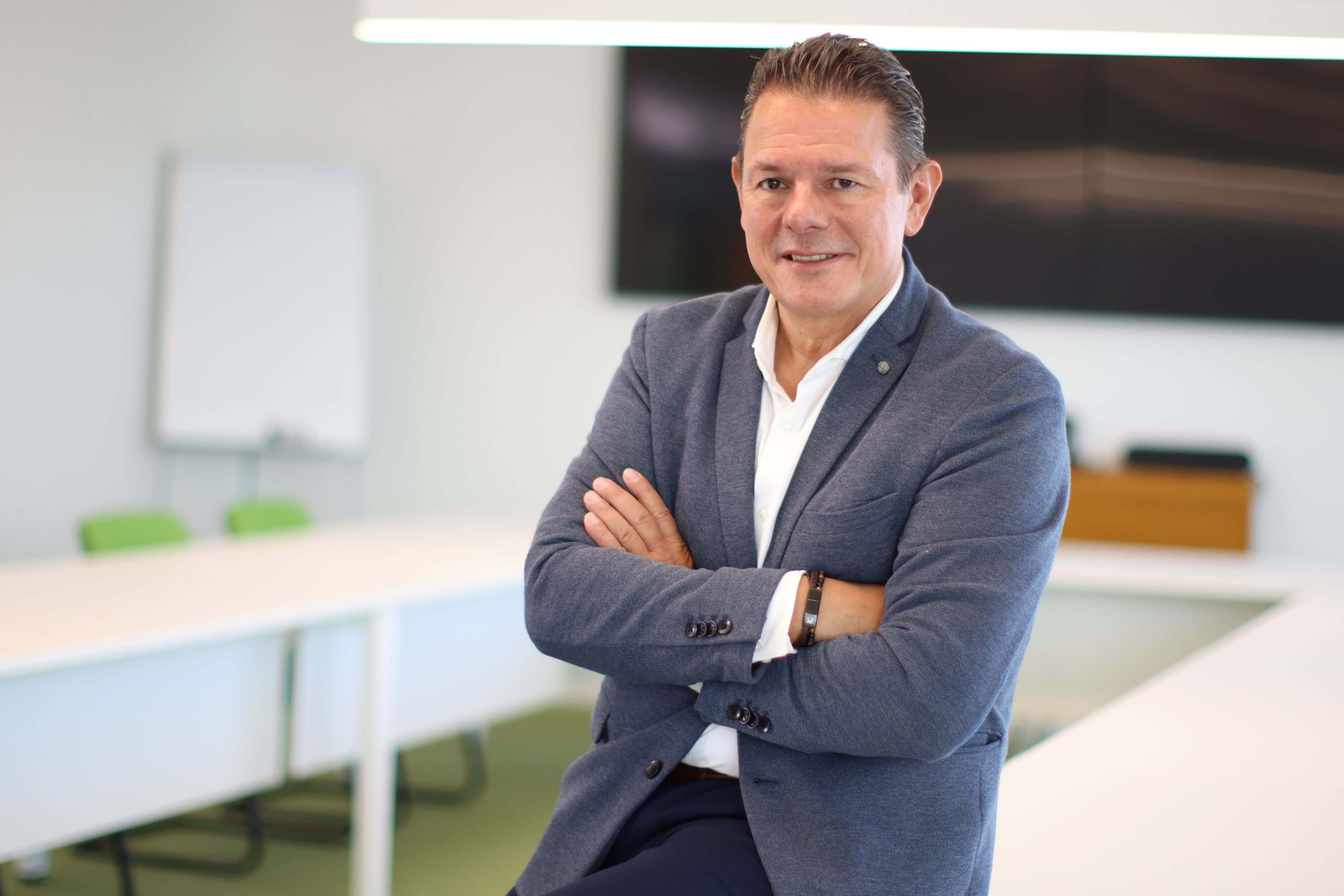

The role of the Chief Information Officer is undergoing a fundamental transformation. For a long time, IT within organizations was primarily seen as infrastructure, a necessary foundation but rarely a strategic driver. This perspective is now shifting significantly. Technology is increasingly becoming a central lever for growth, innovation, and new business models.
Recent international studies show that IT is evolving from a cost factor into a value driver. Particularly successful companies closely integrate technology into their corporate strategy and deliberately leverage data and artificial intelligence to create competitive advantages. Two-thirds of top performers now directly involve their technology leaders in strategic corporate development.
This shift is also redefining the CIO’s self-image. They are no longer just operators of complex IT landscapes, but are increasingly architects of corporate strategy. Their role is to identify technological opportunities early, align them with business models, and translate them into tangible value creation.
To explore the implications for leadership, organization, and collaboration at the executive level, Katja Hartert and Markus Trost, Partners at Odgers, speak with Tobias Guenthoer, CIO and Senior Vice President IT at the STADA Group.
Mr. Guenthoer, many companies today talk about closely aligning business and technology strategy. What does this alignment look like in practice? And what does it mean for the role of the CIO?
Technology and business must be consistently thought of and managed together. At STADA, we have deliberately positioned technology as an integral part of our corporate strategy, not as a peripheral enabler, but as an active value driver.
In this context, the CIO acts as a strategic architect and orchestrator. He translates business ambitions, regulatory requirements, and technological innovations into an integrated, scalable target architecture and ensures its consistent implementation. The focus has clearly shifted from pure cost optimization toward growth, value contribution, and measurable return on investment.
This ambition reflects our values of Entrepreneurship and One STADA: acting entrepreneurially, breaking down silos, and taking responsibility for the overall result.
What role does speed play in this context? Do strategic technology decisions need to be made differently today than a few years ago?
Speed has become a critical competitive factor. Innovation cycles, particularly in data, platforms, and artificial intelligence, have shortened significantly.
At STADA, we have learned that speed does not come from actionism, but from clarity in priorities, decision-making processes, and responsibilities. The principle “pilot fast, scale faster” reflects a culture that truly embraces agility. It is about learning quickly, acting pragmatically, and scaling solutions rapidly, always within clear regulatory and quality guardrails.
If technology becomes a growth driver, how can its contribution to business success be measured? How can the strategic impact of IT be assessed today?
The contribution of IT can no longer be measured in isolation. Its success is evaluated using the same metrics as the business itself.
At STADA, this means that every technological initiative must clearly demonstrate its value contribution. This can be through revenue and profit impact, efficiency gains, or risk reduction. Disciplined cost and total cost of ownership management is not opposed to innovation. It is a prerequisite for it. Only those who measure value rigorously can invest in a targeted way.
How is collaboration at the executive level evolving between CIO, CEO, CFO, and the business units?
Collaboration within top management has changed noticeably in recent years. Traditional budget discussions and silo thinking are increasingly being replaced by continuous, cross-functional decision-making processes.
The One STADA mindset also shapes the executive level. Shared priorities take precedence over functional interests. Leadership is becoming more network-based, and culture and collaboration are emerging as key performance levers, particularly in complex transformation phases.
Many companies have implemented large-scale efficiency programs in IT in recent years. Where do traditional efficiency approaches reach their limits today?
Efficiency remains important, but on its own it is no longer sufficient. Pure outsourcing or scaling for the sake of scaling falls short.
At STADA, we focus on modular, multi-layered platform architectures combined with automation and artificial intelligence. The goal is to enable efficiency, speed, and compliance at the same time. This balance reflects our understanding of entrepreneurship: investing in a focused way, reducing complexity, and allocating resources where they create real value.
More and more companies are working with product or platform structures instead of traditional project organizations. What advantages do you see in these models?
Product and platform models are a key lever for shortening decision-making paths and increasing execution power. Small, focused teams deliver tangible results more quickly.
At the same time, company-wide transformations such as ERP transformations require stable governance structures. At STADA, we combine both approaches through clear rules and responsibilities, complemented by agile elements where they create the greatest value.
Transformation is rarely a one-off project but an ongoing process. How can organizations embed long-term learning capability?
Learning capability is not a standalone program. It is part of the corporate culture. Transformation succeeds where strategy, values, and day-to-day behavior are aligned.
At STADA, continuous learning is closely linked to agility and entrepreneurship. Change is not imposed. It is actively shaped through clear target visions, open communication, and a feedback-driven performance culture.
When introducing new technologies such as artificial intelligence, fears and uncertainties often arise. How can leadership create trust and provide orientation?
Trust is the foundation for the successful use of new technologies, especially artificial intelligence.
For us, integrity means being transparent about opportunities and risks, setting clear ethical and regulatory guardrails, and taking responsibility. Trust is built through education, upskilling, and reliable governance. This is the only way to achieve acceptance and sustainable impact, both internally and externally.
What skills will employees need more of in the future, particularly at the intersection of technology and business?
In addition to technological excellence, personal capabilities are becoming increasingly important. Agility, curiosity, collaboration, and an entrepreneurial mindset are key.
The One STADA mindset encourages leaders to think beyond functional boundaries and to consistently translate technology into tangible value for customers, patients, and the company.
In your experience, what distinguishes organizations that successfully implement transformation from those that struggle or make slow progress?
The lasting difference lies in culture. Organizations that actively live their values will outperform others. At STADA, we say that culture drives performance. This includes our values of Integrity, Agility, Entrepreneurship, and One STADA. These values create orientation, speed, and resilience. Culture is not a side initiative. It is a measurable performance factor that enables long-term success.
Finally, what do you see as the most important leadership task for CIOs over the next five years?
The central leadership task for CIOs will be to consistently translate technology into measurable business value, while at the same time further developing the organization, culture, and capabilities required to sustain that value.
Our experience at STADA is clear. Only when technology, leadership, and values work together consistently does lasting impact and real competitive advantage emerge.
Mr. Guenthoer, thank you very much for this insightful conversation.