

Making AI a Strategic Priority Across Entire Organization: Interview with Julian Geiger
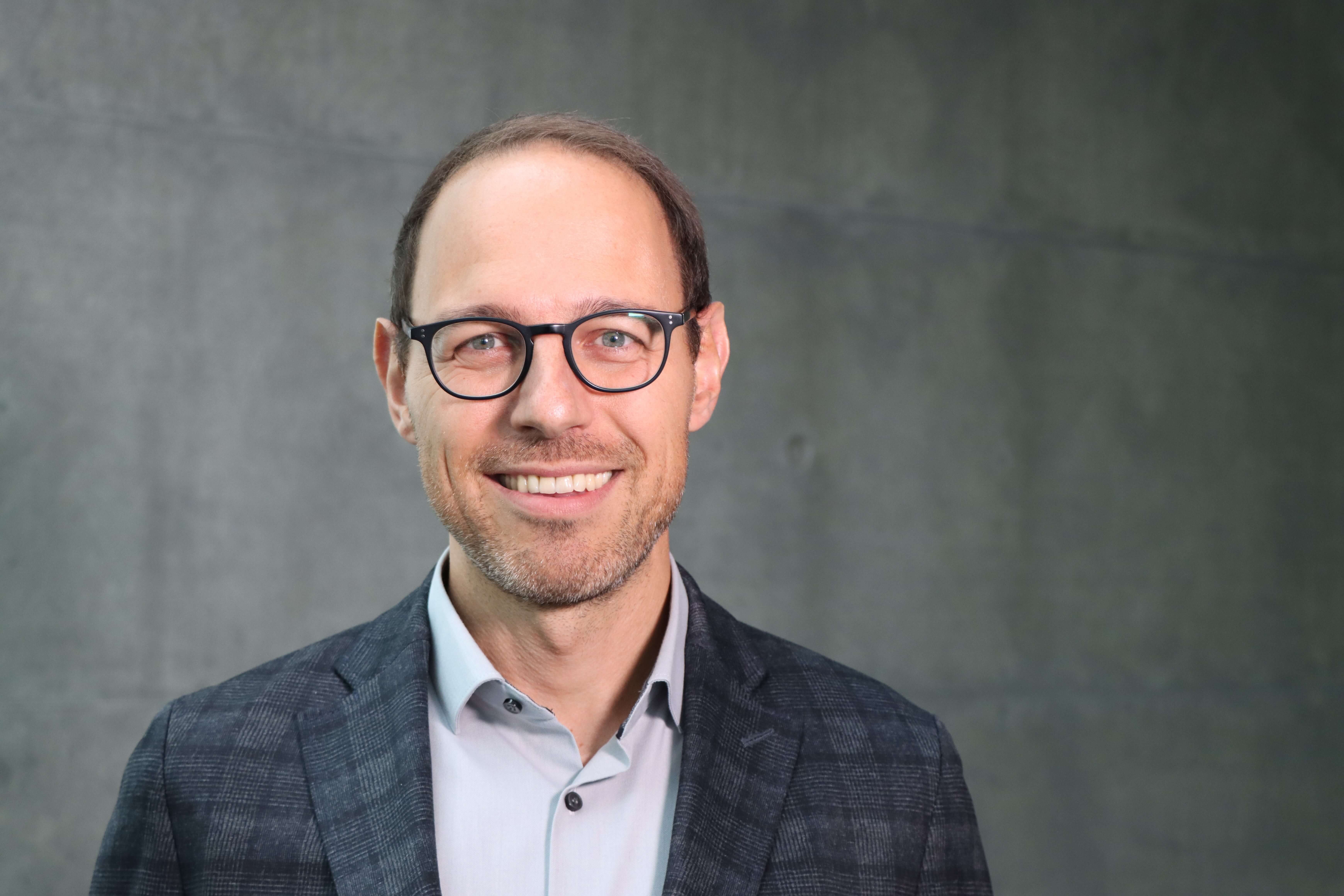

Julian Geiger speaks with Markus Trost about how the Nemetschek Group embeds artificial intelligence as a strategic priority and translates it into impact across the organization.
With more than 15 years of experience at the intersection of technology, product innovation and large-scale transformation, Julian Geiger is shaping how artificial intelligence moves from promise to business reality. As Chief AI Officer at Nemetschek Group, he is driving one of the most ambitious AI transformations in the European software landscape—turning a decentralized portfolio into an integrated, AI-first organization.
In recognition of his impact, Geiger was named one of the leading minds in AI leadership at the Best of AI Awards last year. In this conversation, led by Markus Trost, he shares what it takes to lead in a field defined by exponential change—and why the real challenge is not understanding AI, but translating its potential into tangible business value.
Your career in the field of artificial intelligence is impressive. What was the pivotal moment that led you to pursue this path as a leader? And when was the moment you deeply regretted it?
More than twenty years ago, I came across Ray Kurzweil's The Age of Intelligent Machines and The Singularity is Near. These books fundamentally changed how I thought about the future. The central question they raised — what happens to our world when we achieve artificial general intelligence, and eventually artificial superintelligence? — never left me. From that point on, I deliberately shaped my career around software and technology to stay as close to AI as possible.
When Deep Learning gained momentum in the 2010s, that felt like real progress. But the true inflection point came in 2022, when I was at Google and saw firsthand how Transformer architectures and straightforward compute scaling were unlocking capabilities nobody had expected this soon. What had been a long-term intellectual fascination suddenly became an immediate, tangible reality.
As for regret: I wouldn't call it regret, but there's a real cost to working in a field that moves this fast. Staying up to date feels like drinking from a firehose — and the diameter of that hose keeps growing. You have to accept that you'll never know everything and focus your energy where it matters most.
Leading is always related to transformation and development. Could you please be so kind and describe the company from this perspective as an environment you are operating in? How did the company manage to make AI a strategic priority and a commercial success?
Nemetschek has a unique history. For most of its existence, it operated as a financial holding — a portfolio of largely independent software brands, each with its own products, customers, and culture. That model was successful for a long time, but it also meant duplication: similar problems being solved in parallel across the organization, with limited collaboration between brands.
The transformation we're driving now is multi-dimensional. First, we're helping people across the group understand the strong value of working together — that alignment and joint execution create something far more powerful than any single brand can achieve alone. Second, we're building shared capabilities in areas like AI, data, and platform infrastructure that benefit all brands. And third, we're making AI a strategic priority that runs through everything — from how we build our products to how we go to market. This shift from a decentralized holding to an integrated, AI-driven software group is probably the most ambitious transformation in the company's history.
You have been recognized by Capital as one of the top AI leaders in the DACH region. In your opinion, what makes leadership in the field of Data & AI special, and what aspect are you particularly passionate about?
What makes leadership in AI distinct from other domains is the constant need to bridge the gap between technology and business. AI is no longer a niche topic for the CTO's team — it's essential to every part of a company's strategy and needs to be understood at every level of the C-suite.
AI is no longer a niche topic — it’s a core part of business strategy, and it must be understood at every level of the C-suite.
A big part of my role is translating complex technology into clear language that decision-makers can act on. But what I'm most passionate about goes beyond translation: it's about opening people's eyes to the sheer scale of the opportunity in front of us. When you help someone truly grasp what AI can do for their business, their industry, their customers — that creates excitement and urgency. And that combination of excitement and urgency is the best rocket fuel for transformation at speed.
As a leader in such a dynamic field as AI, how do you inspire your stakeholders in top management and your team? And what strategic vision have you aligned them with?
It starts with a compelling, inspiring picture of where the industry is heading — and what role we want to play in it. In the AEC industry, the opportunity is enormous: we can fundamentally improve how buildings and infrastructure are designed, built, and operated. That's not an abstract promise; it translates directly into better outcomes for the world — more sustainable buildings, fewer errors on construction sites, more efficient operations.
I always start from that big picture. How do we create better outcomes for society? How do we genuinely improve the day-to-day lives of our customers — the architects, engineers, and construction professionals who use our software? And then, working backwards from there: how does that change the way we build products, how we operate as a company, and how we monetize our solutions? When stakeholders see that the vision isn't just about technology for its own sake but about real impact on every level, alignment follows more naturally.
How does the company master the challenge of implementing and scaling successful use cases? Can you please share an example?
As a software company, the most impactful thing we can do is transform how we build software itself. We've taken a hard look at our entire software development lifecycle — from ideation and design through coding, testing, and deployment — and are rethinking it end-to-end with AI at the center.
Concretely, this means adopting what we call an AI-First SDLC. AI is not an add-on or a feature layer we bolt onto existing products. It's embedded into how our engineers work every day — from AI-assisted code generation and automated testing to AI-driven product design decisions. At the product level, we've been rolling out the Nemetschek AI Assistant across all our brands since 2025, giving users intelligent, context-sensitive support directly within their workflows. The key to scaling was building shared AI infrastructure and a common AI layer that all brands can leverage, rather than having each brand build from scratch. That approach turns every investment in AI into a multiplier across the entire group.
The key to scaling was building shared AI infrastructure and a common AI layer that all brands can leverage.
You have been successful in the AI field for quite some time. How will this technology change leadership? And how will your leadership specifically evolve over the next three years?
AI will change leadership in three fundamental ways. First, the speed of decision-making will increase dramatically. When leaders have access to real-time synthesis of complex information — market signals, operational data, customer feedback — the expectation shifts from deliberation to action. Leaders who can't operate at that pace will fall behind. This is already visible today.
Leaders who cannot operate at the speed enabled by AI will fall behind. This is already visible today.
Second, the nature of expertise will shift. Leaders won't need to be the deepest expert in any single domain, but they will need the judgment to ask the right questions, evaluate AI-generated insights critically, and know when to trust the output and when to push back. The ability to work effectively with AI as a thinking partner becomes a core leadership skill.
Third, organizational structures will flatten. When AI handles much of the information aggregation and analysis that middle management traditionally performed, the layers between strategy and execution thin out. Leaders will operate closer to the work, with smaller, more empowered teams.
For my own role over the next three years, I expect the focus to shift from evangelizing AI and building foundational capabilities — which is where we've spent much of our energy — toward orchestrating AI-native operations at scale. The question will move from "how do we adopt AI?" to "how do we continuously reinvent ourselves in a world where AI capabilities double every year?"
As a successful participant in the second cohort of the “Best of AI-Award", have you experienced positive effects from your participation?
Absolutely — on two levels. Internally, the recognition gave visibility and credibility to the many people working on AI across the Nemetschek Group. In a large, multi-brand organization, that kind of external validation matters — it reinforces that what we're building is recognized beyond our own walls.
Externally, the biggest benefit has been the peer network. The cohort brings together AI leaders from very different industries and company stages, and the conversations are refreshingly honest and practical. You learn as much from someone scaling AI in manufacturing or insurance as you do from peers in software. That cross-pollination of ideas and experiences is something I genuinely value.