

Leadership in Times of Profound Change: Julia Koch on Results Orientation, AI, and Organizational Diversity
7 min read
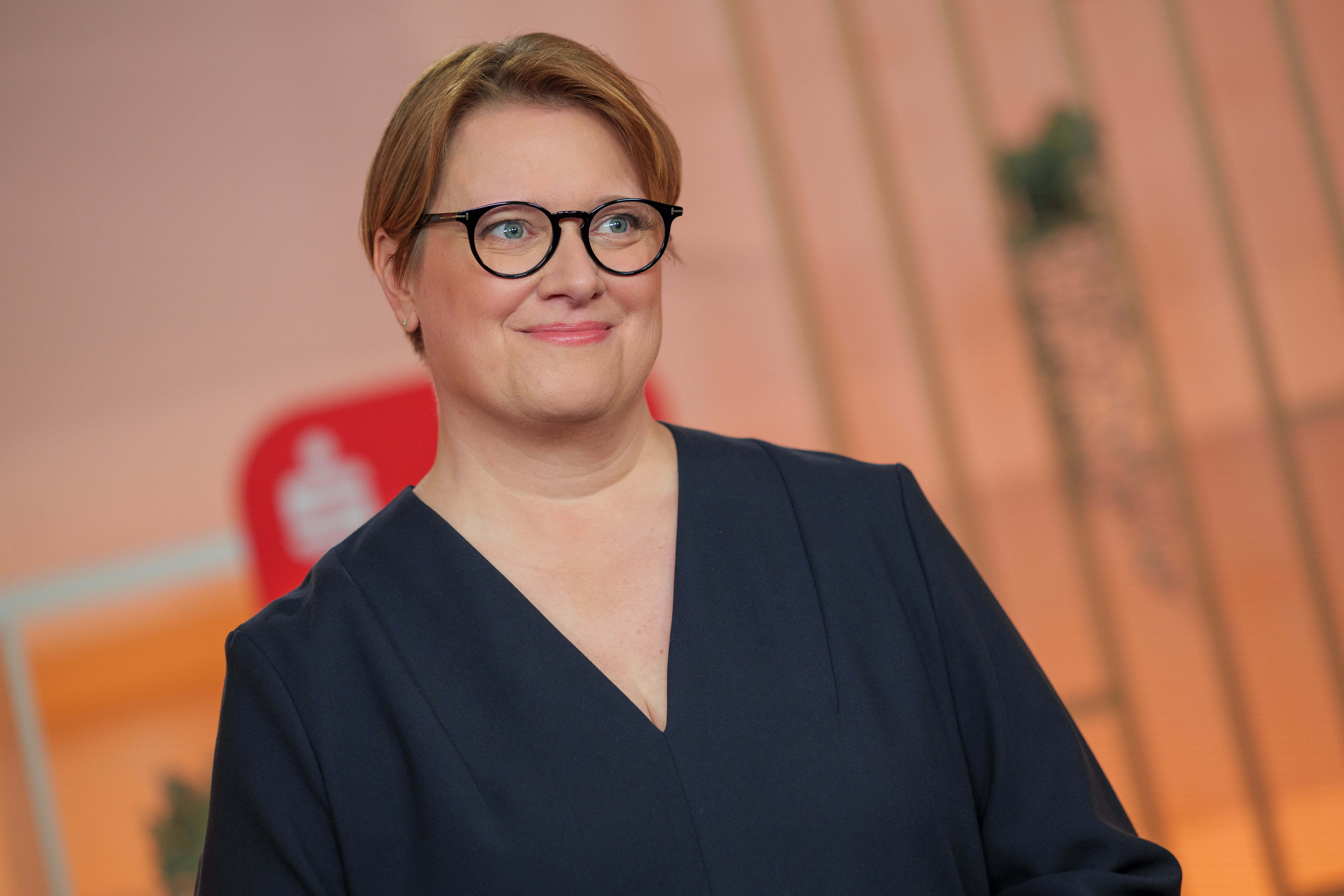

With the help of artificial intelligence, companies are transforming at speed in response to rising cost pressure, talent shortages, and rapidly changing customer expectations.
At Finanz Informatik, the digitalization partner of the Savings Banks Finance Group, this dynamic transformation is combined with the ambition to deliver modern banking that is secure, stable, and high-performing for the savings banks and their 50 million customers.
Julia Koch, Managing Director of Finanz Informatik and responsible for Application Development, operates right at the heart of this tension. She represents a generation of leaders who do not see technology as an end in itself, but as a lever for customer-centric innovation.
In conversation with Christine Kuhl, Partner at Odgers, she discusses decision-making in times of uncertainty, trust instead of micromanagement, and why organizational diversity has become a strategic success factor today.
Ms. Koch, what changes in your environment are currently the most challenging for you as a leader?
There isn’t one single change. Of course, we repeatedly encounter specific triggers such as the pandemic, the refugee crisis, or current technological leaps. But for us, change is no longer a singular event. It has become a permanent state. We live in very dynamic times. In this context, an organization’s ability to continuously adapt is clearly a success factor.
As the digitalization partner of the Savings Banks Finance Group, we have been in a phase of significant growth for the past five years, driven by the increasing digitalization of our society. Shaping this growth sustainably, with a focus on future viability, is both a crucial and an exciting challenge.
At the same time, technological progress, currently driven in particular by generative and agentic AI, is fundamentally changing the way we work. This requires new skills, new ways of working, and continuous realignment of teams. And all of this while maintaining a consistently high level of delivery.
In such a dynamic environment, maintaining the balance between stability, growth, and measurable impact is one of the central leadership tasks.
How do you manage this tension between stability, continuous development, and strong growth in practice?
By working on it continuously with our teams and by remaining consistently focused on results.
In the end, our end users, whether savings bank customers or the banks themselves, are not interested in how much change, restructuring, or technological realignment is happening behind the scenes. What matters is the experience we deliver when they use our banking solutions.
If that experience is compelling and our solutions are stable, intuitive, high-performing, and therefore competitive, then we have fulfilled our mission. That is the benchmark for everything we do.
How do you bring employees along in this dynamic environment?
Primarily through intensive and targeted communication, at a higher frequency and with more openness than Finanz Informatik was used to just a few years ago.
We act in a very focused way: providing core information for the entire organization, while also offering very specific impulses for my Application Development division. This happens through various formats that not only convey information but, above all, enable dialogue with and within teams. Much of the work takes place directly with the business units, where strategy is translated into day-to-day operations and where impact ultimately happens.
At its core, it’s about staying in close exchange with teams, working on their topics together, and deliberately taking them out of their usual routines — through different approaches, new formats, and changed perspectives. Change only succeeds if you continuously bring people along.
What formats do you use in practice? Classic meetings, emails, dailies?
In addition to traditional jour fixe structures and team formats, two newer formats have become particularly important in recent years.
First, we introduced the so-called “Garage” in 2022, a format that provides a deliberate look into the “workshop.” We now use it both across the entire organization and in a version tailored specifically to Application Development.
Second, we established the “Inside Talks” last year. These are dedicated sessions where teams from different business units bring in topics of their choice and discuss them openly and directly with me. Typically, the topics are as diverse as the teams themselves. But when I hear the same questions repeatedly across multiple sessions and locations, I know there is a recurring issue. We can then bundle these signals at management level and derive strategic impulses from them.
With formats like these, our goal is to create conditions in which people empower each other and translate transformation into their daily work. In my experience, this works far better than distributing information and tasks top-down.
You’ve talked a lot about communication. What other competencies are essential today for leading successfully through complex transformation?
Interdisciplinary thinking and acting are key for me. If leaders only focus on their own piece of the puzzle, they risk creating disconnects with other areas of responsibility. In a complex organization, it’s essential to think holistically in order to truly work in a solution-oriented way.
This requires a clear understanding of one’s own contribution to overall success. Ultimately, what counts is the positive impact for the Savings Banks Finance Group and its end customers.
How do you make decisions in times of uncertainty?
In times of high uncertainty, we consciously rely on two principles.
First, we distribute decision-making authority intelligently: senior management provides the guidance and strategic framework, while operational teams make the concrete implementation decisions. This creates short paths, high speed, and strong judgment close to the issue.
Second, we make decisions more based on assumptions and less on past experience, whose validity is becoming increasingly short-lived. We work with clear hypotheses about the future, validate them as best as possible with current data, and build a robust foundation from that. At the same time, it is essential to regularly question decisions and remain flexible enough to adapt them to changing conditions.
What role does trust play in this context?
Trust is essential. I am responsible for more than 2,500 employees and 10 to 12 division heads who report directly to me. At this scale and span of control, micromanagement is neither realistic nor useful. Increasing complexity in terms of topics and speed also makes expert leadership nearly impossible. No single person can oversee or decide everything anymore.
The role of leadership is not to know the best solution, but to enable the best solutions to emerge within the team and to provide the necessary direction and trust for independent problem-solving.
This fundamental trust is reinforced by results and gradually becomes a firm conviction.
And when something doesn’t go as planned, we analyze the causes together with the teams: Is it the environment? Legacy technology? Changing user needs? The reasons can vary widely and the solutions must be equally differentiated.
What role does learning play in your organization?
For us, learning is not a separate topic. It is an integral part of our daily work. In an environment like ours, new requirements arise continuously, whether technical, technological, or organizational.
We have therefore redesigned our leadership development. Traditional formats remain helpful, but in today’s dynamic environment, they are often no longer sufficient. Especially due to our growth, we have many new leaders who need orientation and practical tools for their daily work. That’s why we introduced so-called leadership learning journeys — modular programs based on real-life challenges and developed together with coaches and trainers.
With the rapid advancements in AI, learning has also gained a new strategic dimension. One key insight is that training loses impact if it is not applied immediately. At our company, anyone attending an AI seminar implements a concrete use case within the following week. This is the only way to ensure effective transfer into daily work.
This form of learning, linking training directly to value creation, also has structural implications. We are moving away from isolated AI use cases toward platform-based solutions to enable scaling and broader adoption. Our goal is to embed AI not as a one-off initiative, but as an integral part of how our teams evolve.
For me personally, continuous learning has been a given for many years. It is part of my daily routine and a prerequisite for remaining effective in such a rapidly changing environment.
AI can also create fears. Have you observed such reactions?
Yes. Especially in 2024, when we introduced AI-supported fraud prevention in payment transactions. Among employees in the savings banks, there were initial concerns about being replaced by technology.
Today, the picture is different. Many employees can no longer imagine their work without this support. Without AI, numerous “false positives” could no longer be processed effectively and some fraud cases would not be detected at all.
Among our developers, we see the opposite: a strong desire to work even more with AI, albeit within clear, compliant, enterprise-grade frameworks. At the same time, this requires careful expectation management: What is hype, and what is already reliable enterprise technology?
Our approach is clear: by reducing repetitive tasks, we free up time for more complex work. In this way, AI is no longer perceived as a threat, but as a support and a tool for improving quality.
What advice would you give to young leaders in this fast-changing world?
Have the courage to try new things and take action. Things can always go wrong, regardless of whether you are young or experienced.
Personally, I often stepped into new roles out of curiosity. Rarely did I know exactly what to expect and in most cases, it worked out well.
What values guide your leadership approach?
Results orientation is central for me. Emotions are part of it, but they should not distract from the focus. Ultimately, it’s about taking action and delivering measurable results.
I share the belief that those who deliver results are usually right even if the path there was not always perfect or linear. What matters is creating real impact.
Equally important is bringing together the right capabilities within a team. In a complex world, heterogeneous, cross-functional teams achieve better results than homogeneous groups. A single puzzle piece rarely creates impact. Only the combination of different perspectives makes the difference.
You deliberately build diverse teams. Why is that so important to you?
We develop solutions for around 50 million people. A target group that is as diverse as society itself can only be addressed in a truly user-centric way by equally diverse teams.
This requires perspectives beyond technology such as business understanding, user experience, security, responsibility, and everyday relevance. Otherwise, we inevitably develop solutions that miss large parts of the population.
When I joined Finanz Informatik in 2022, the organization was still much more homogeneous. Today, our teams are significantly more diverse in terms of gender, background, nationality, and professional experience. Diversity is not an end in itself or an image topic. It is a business necessity and a prerequisite for sustainable innovation.
You have succeeded as a woman in a traditionally male-dominated industry. What helped you personally?
I don’t know it any other way. Since my first student job, I was often the first or only woman in the respective environment. For me, that was never unusual. What matters is to remain authentic and consistently follow your own path. In most cases, it works out.
Ms. Koch, thank you very much for the open and inspiring conversation.