Leading Through Uncertainty
4 min read
Behind Every Successful Transformation in Retail is a Brilliant Leader
07/10/2026


5 min read
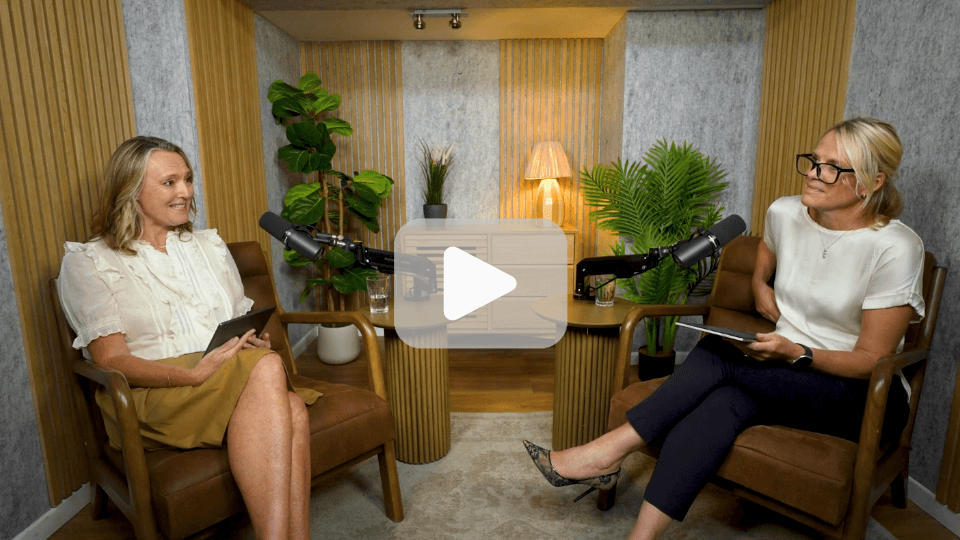

Some of the strongest industrial leaders have built careers across markets, functions, product lines, sites and operating environments, strengthening their understanding of complex industrial businesses.
That breadth matters in Australia and Asia-Pacific, where industrial leaders are navigating constrained talent pools, supply chain exposure, energy transition, defence investment and rapid technological change across significant distances and complex global structures. In this environment, mobility has become a leadership advantage: it develops people who can adapt global operating models to local realities, make decisions with incomplete information and influence well beyond their immediate market.
In this episode of Leading Through Uncertainty, Lucy Harding and Julia Soutter explore why leadership mobility is becoming harder to secure just as organisations need it most, and how varied experiences prepare executives for broader responsibility.
The conversation explores:
Why Don’t the Best Industrial Leaders Follow a Linear Path? | Explore the episode your way: watch the conversation, listen on Spotify, or read the full article below
Explore All Episodes: Leading Through Uncertainty
Follow on Spotify | Subscribe on YouTube
Australia’s industrial landscape is in transition. Major infrastructure programmes continue, but fewer new projects are coming online, while investment is shifting towards energy transition, critical minerals, aerospace and defence. AUKUS, shipbuilding and the infrastructure required ahead of the Brisbane 2032 Olympic and Paralympic Games are creating intense demand for specialist capability in particular locations.
The challenge is whether leaders are willing and able to move to where opportunity is emerging. Australia’s scale means expertise can be concentrated thousands of kilometres from demand, while established executives may be reluctant to relocate away from family, community and lifestyle. Across the wider region, organisations want to strengthen local leadership while retaining the global outlook traditionally developed through international assignments.
This creates a growing talent issue. Where relocation is difficult, cross-functional roles, regional projects, site leadership and transformation assignments can help organisations deploy capability and prepare executives for future demand.
What we’re looking for is people who have enhanced problem-solving skills.
Success in this environment requires industrial leaders who can operate across local, regional and global contexts. They need to understand customers, regulation, assets and talent realities in individual markets, while also being able to lead across borders, navigate different operating environments and influence decisions across complex organisations. For leaders based in Australia, that may mean shaping global strategy from an Australian headquarters or influencing regional and global decision-makers elsewhere.
Mobility can accelerate that range by immersing leaders in different cultural, commercial and stakeholder environments. But experience need not be international to be valuable. Roles that connect different markets, functions, operations and decision-makers can also teach leaders to understand competing priorities, translate market conditions and make good decisions across organisational boundaries.
In large and complex industrial organisations, formal authority is rarely enough. Leaders need to build relationships and influence across functions, businesses and geographies without losing sight of commercial performance, operational risk or customer needs.
Many of the strongest executives in Australia’s largest industrial organisations have spent years within the same company, but their careers have not stood still. They have moved between functions, products, regions and operating environments. Some have taken on difficult projects or site roles; others have shifted from a specialist discipline into P&L leadership. Mobility, in this sense, is not defined by changing employer. It is the deliberate accumulation of different experiences.
Each move develops a different dimension of industrial leadership. Experience in another geography builds cultural intelligence and a global mindset. A functional shift broadens commercial and operational understanding. Working across sites, business units and complex structures strengthens influence and stakeholder management. Difficult assignments encourage leaders to reconsider assumptions when established operating models no longer work.
Some of the best leadership skills come from adversity. That is why the “side door” can be more valuable than the obvious promotion.
A lateral move into a different function, geography or difficult transformation may build more leadership capacity than another step along a familiar path.
When industrial challenges are unprecedented, organisations cannot always recruit someone who has solved the same problem before. Curiosity, judgement and enhanced problem-solving become critical, particularly where decisions affect major assets, workforce safety, supply continuity or long-term capital investment. Leaders need to analyse an incomplete set of facts, distinguish reliable signals from noise and decide when the evidence is sufficient to act.
Recent supply chain disruption demonstrates why. Organisations have had to move beyond established operating models and identify new partnerships and routes to supply. Varied experience can help leaders transfer lessons between contexts while remaining willing to adjust.
AI is reshaping industrial business models, but adoption varies significantly by sector. Defence organisations may move cautiously because of risk and governance, while energy, mining, resources and transport businesses are exploring applications in maintenance, rostering, resource identification, automation and safety.
Industrial leaders must distinguish meaningful applications from noise, ensure appropriate data foundations and adopt at a pace suited to their operating environment.
For industrial executives with global ambitions, every career move should add a capability, perspective or level of accountability. For industrial organisations, the priority is to create those opportunities deliberately through cross-functional assignments, regional projects, site leadership, international exposure and succession pathways that reward breadth rather than only upward progression.
Mobility remains an important part of that development, but it is not the only measure of potential. Boards and executive teams should assess the scale and complexity of a candidate’s experience, the judgement they have shown under pressure and how effectively they have crossed functional, cultural or organisational boundaries. They should also create varied development opportunities when relocation is not possible. In an uncertain industrial environment, leadership range is the goal, and mobility is one of the most effective ways to build it.
_________________________________________________________
Odgers provides integrated executive search and leadership advisory services. We are deeply rooted in our local markets, which we combine with global perspective and reach to help organisations build transformational, world-class leadership teams.
Get in touch. Follow the links below to learn more, or connect directly with our dedicated executive search experts and Industrial consultants at your local Odgers office here.

Subscribe to our global newsletter to discover our latest insights, opinions and featured articles.
Join us on our social media channels and see how we're addressing today's biggest issues.