

International reach starts from within
4 min read

What three days with research professionals from thirteen countries teaches us about staying the course in uncertain times
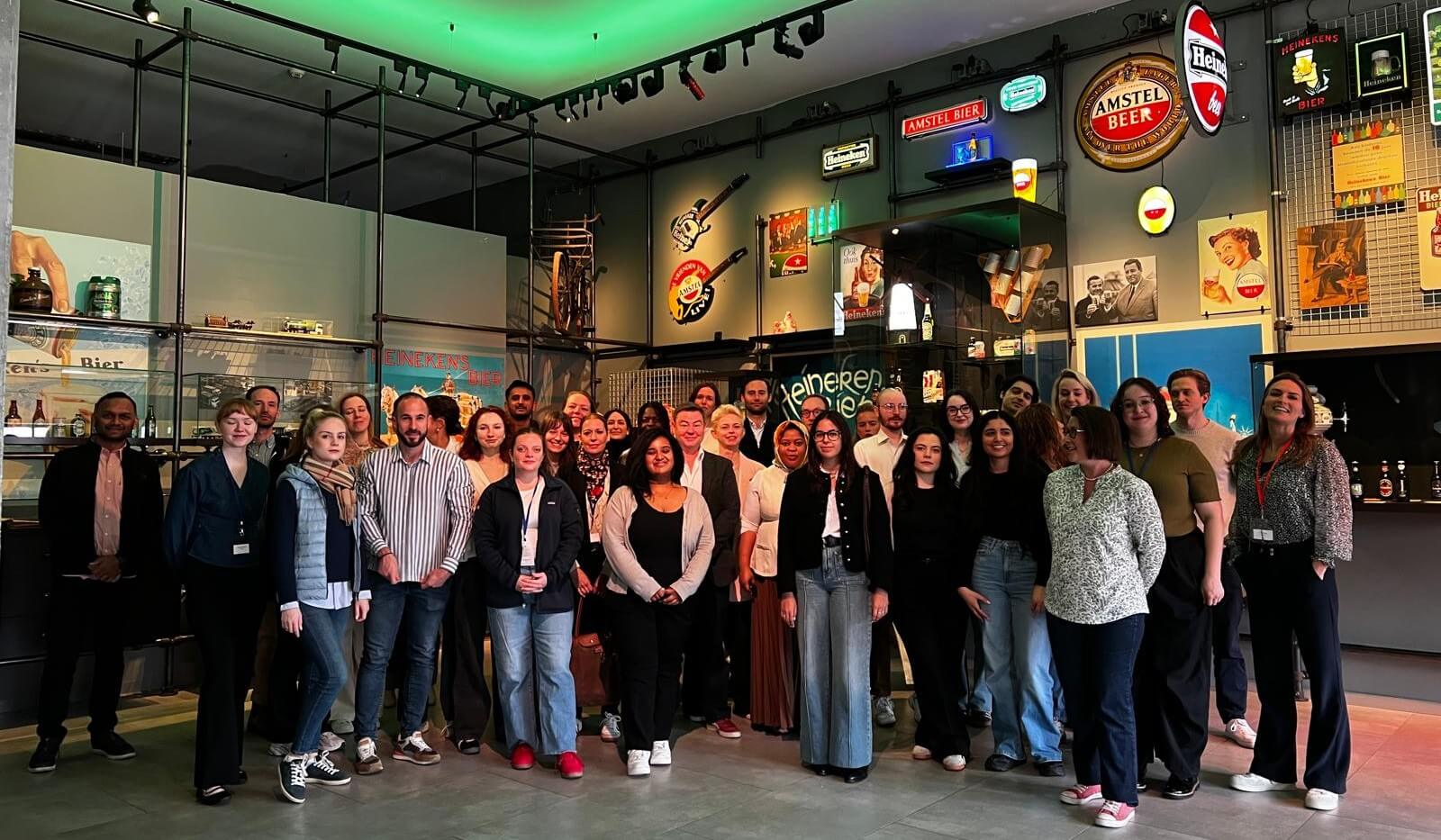
Many organisations describe themselves as international. Fewer organisations actually demonstrate it. Last week, Odgers showed what that means in practice: research professionals from more than thirteen countries, spanning EMEA, the US, India and South Africa, came together in Amsterdam for three days.
Not for a conference. Rather, as a deliberate investment in the people who lay the foundation for every leadership appointment we guide.
Staying distinctive as context shifts
The first day centred on a question many executives will recognise: how do you remain distinctive when the world around you moves faster than your ways of working can accommodate? The sessions with Sebijn Bunt and Ed van der Sande focused on leadership and interview skills: how to ask the right questions, how to see what lies beneath the surface, and how to translate that into insight that genuinely matters.
One observation returned consistently: those who wait for the right moment to renew, arrive too late. Relevance is not a destination, but a disposition.
AI as an instrument, not an answer
The second day brought to the table a question that currently occupies virtually every boardroom: what do we do with AI, and how do we approach it responsibly? Ajuna Soerjadi, philosopher and AI ethicist, and Julia Kozak guided participants through what AI actually is, what it can and cannot do, and which risks warrant active attention.
What stood out: the initial response to AI still tends to be a mix of curiosity and caution. The question is not whether to engage with it, but how to do so deliberately. AI produces text, not truth. Human judgement remains central. That applies to a research professional no less than to a CEO.
Resilience as an active choice
The third day built on the theme Odgers presented earlier this year during our resonance session on resilience. Erik Wegewijs guided participants through a session on moving with change: not as passive adaptation, but as a conscious choice to remain open to what the situation requires.
The lesson that stayed sharpest: resilience does not begin when things become difficult. It begins with the willingness to let go of assumptions, before the pressure demands it of you.
What this teaches us about working together
Three days with professionals from different countries and contexts always reveals something that reports and video calls cannot: how people genuinely think, and what emerges when those perspectives are brought together with intent. Assumptions are examined. Insights gain depth. The energy that generates translates directly into the quality of the work.
For executives, there is a recognisable parallel here. When did you last bring your own people together deliberately, not to discuss results, but to work on the quality of the profession itself? Knowledge and insight multiply only when space for that is consciously created.
That requires a deliberate choice. Three days in Amsterdam showed that the choice yields results.
At Odgers, we believe the best advisers keep moving, keep questioning, and bring others along in that development. Do these questions resonate with you, or would you welcome a conversation about leadership in complex circumstances? Get in touch!

Never miss an issue
Subscribe to our global newsletter to discover our latest insights, opinions and featured articles.
Follow us
Join us on our social media channels and see how we're addressing today's biggest issues.